
Why the Dog Comes to the Trattoria in Italy
Italy has no national law that keeps dogs out of restaurants. Rome, Tuscany and Milan have written the welcome into their own rules, and the owner who wants to say no has to put it in writing.
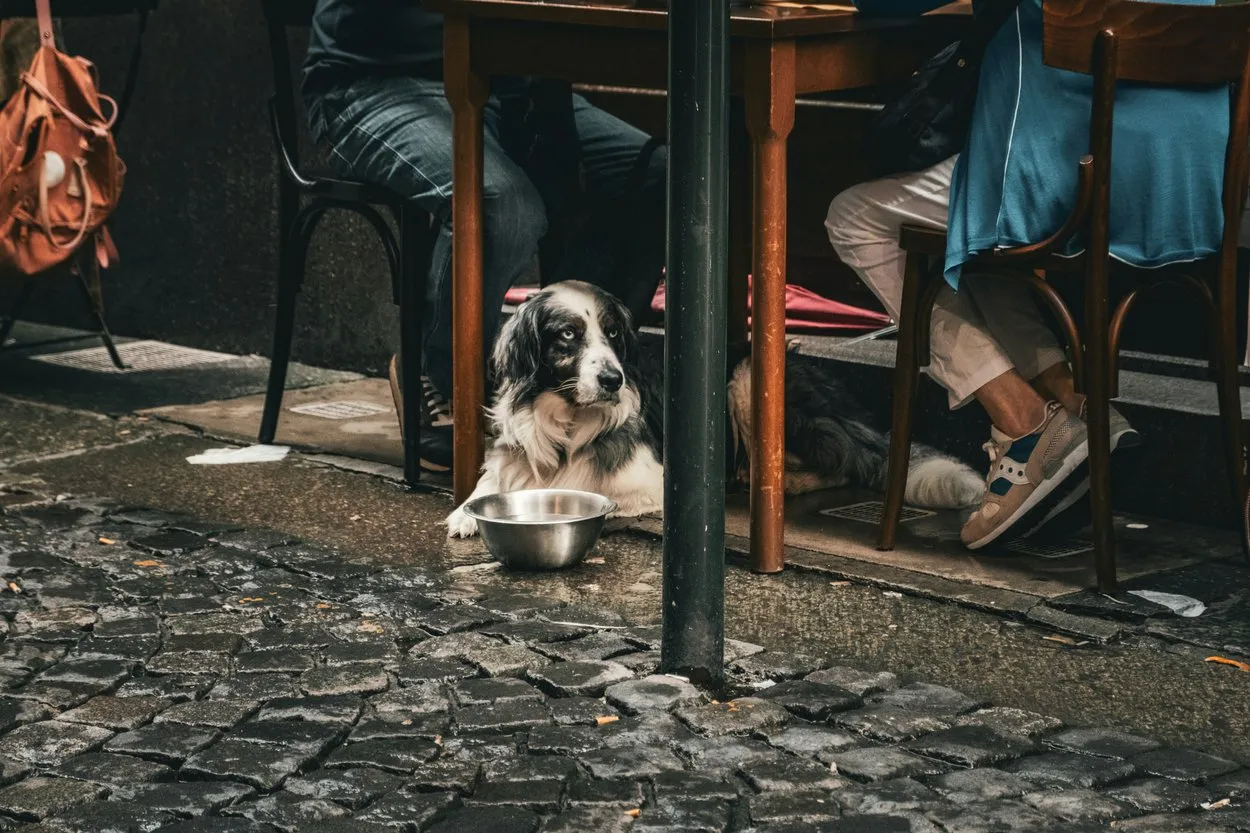
On 24 October 2005 Rome's city council voted, without a single vote against, for a 59 article rulebook on how the city treats its animals. The preface, signed by Monica Cirinnà, the mayor's delegate for animal rights, gave it a title that tells you most of what follows: Rome and its non-human citizens. Article 32 of that regulation is headed, in brackets, bars and restaurants, and its first line says that dogs with their owner "hanno libero accesso", free access, to every public establishment in the city. In Rome the dog at the next table is not a favour. It is the rule.
A Hygiene Law About Kitchens
What sits above every Italian restaurant is the same European text that sits above every French one. Regulation 852/2004 on food hygiene asks, in Annex II, Chapter IX, point 4, for procedures "to prevent domestic animals from having access to places where food is prepared, handled or stored". That means the kitchen and the storeroom. The dining room is not mentioned, and nothing in Italian national law fills the gap with a ban.
The trade read it the same way. In 2013 FIPE, the federation of Italian bars and restaurants, presented a manual of good practice for the restaurant, delicatessen and pastry trades, written with the collaboration of the Ministry of Health. Il Fatto Alimentare reported its key line: "non ci sono motivi igienico sanitari per impedire ai cani di entrare nei pubblici esercizi". There is no hygiene reason to keep dogs out of bars and restaurants. The same report was careful about the limit. Supermarkets are not public establishments in that sense, so the dog waits outside the shop, and the freedom inside a bar, restaurant, hotel or gelateria holds only if its owner agrees.
Rome, Florence and Milan
Rome went first of the three. Article 32 opens the door to every public establishment in the city, and then gives the establishment one way to close it: a bar or restaurant may refuse animals if it sends a notice to the city's animal protection office. The default is yes. A no has to be filed.
Tuscany wrote the same idea into regional law four years later. Article 21 of Regional Law 59 of 2009 says that dogs with their owner have access to all public and commercial establishments and to offices open to the public anywhere in the region. A manager who wants to limit that may do so, after informing the mayor. So the trattoria in Florence, the wine bar in Lucca and the café on the square in Siena all start from the same place as the one in Trastevere.
Milan followed in 2020 with a regulation approved by the city council on 3 February. Its article 16 lets dogs into places open to the public, and then sets out what a refusal costs. A venue that wants to keep animals out must send a written, documented and reasoned notice to the city's animal protection office, keep the stamped copy on the premises for inspectors, and put a sign at the entrance where it can be seen.
The Lead and the Muzzle
The welcome comes with equipment. Rome's article asks owners to bring a dog into a bar or restaurant on a lead and wearing a muzzle, to make sure it neither dirties the place nor disturbs anyone, and allows a vet to certify a temporary exemption from the muzzle for a dog whose anatomy or health makes one unsuitable. The FIPE manual, as reported in 2013, asked for the same pair.
The national rule is lighter. A Ministry of Health ordinance of 6 August 2013 on public safety around dogs, renewed every year since and most recently in the Gazzetta Ufficiale of 20 August 2025, asks for a lead no longer than 1.5 metres in towns and in places open to the public, outside the fenced dog areas a council provides.
The muzzle has to come with you, rigid or soft, to go on the dog if it puts people or animals at risk or if the authorities ask. Tuscany's law asks for a lead and a muzzle only where national rules require them, and Milan's article 16 repeats the national pair: the 1.5 metre lead, and a muzzle always carried. In practice that means a lead in hand and a muzzle in the bag, and in Rome, by the letter of article 32, the muzzle on.
Who Has the Last Word
None of this makes every restaurant the dog's by right. Outside the cities and regions with their own rules, the owner's agreement is the condition the 2013 manual set, and even in Rome and Milan a venue can still refuse once it has filed its notice with the city, and in Milan put up the sign. A trattoria with a tiny dining room may well have done so. Read the door before you go in, ask if there is no sign, and keep the muzzle within reach, in Rome above all. Our guide to eating out with your dog sets the rules country by country, and the Rome city guide is the place to start once you arrive.
Visitors who know France will find the result familiar from the other side. In France, as we told in Why the Dog Comes to Dinner in France, there is no law in the dog's favour, only the absence of one against it and an owner's habit of saying yes. In the Italian cities that have written rules, the yes is on paper and the no is the one that needs a reason.
Why It Reads Like This
The tone of these texts is the striking thing. A hygiene regulation tells a restaurant where an animal may not go. Rome's tells it where the dog may go, and makes the restaurant do the paperwork to say otherwise. In 2022 Italy amended Article 9 of its Constitution to add a sentence that the 2025 ordinance quotes at its head: "La legge dello Stato disciplina i modi e le forme di tutela degli animali", the law of the state governs how animals are protected. Rome had been writing its dogs into the bar for seventeen years by then.
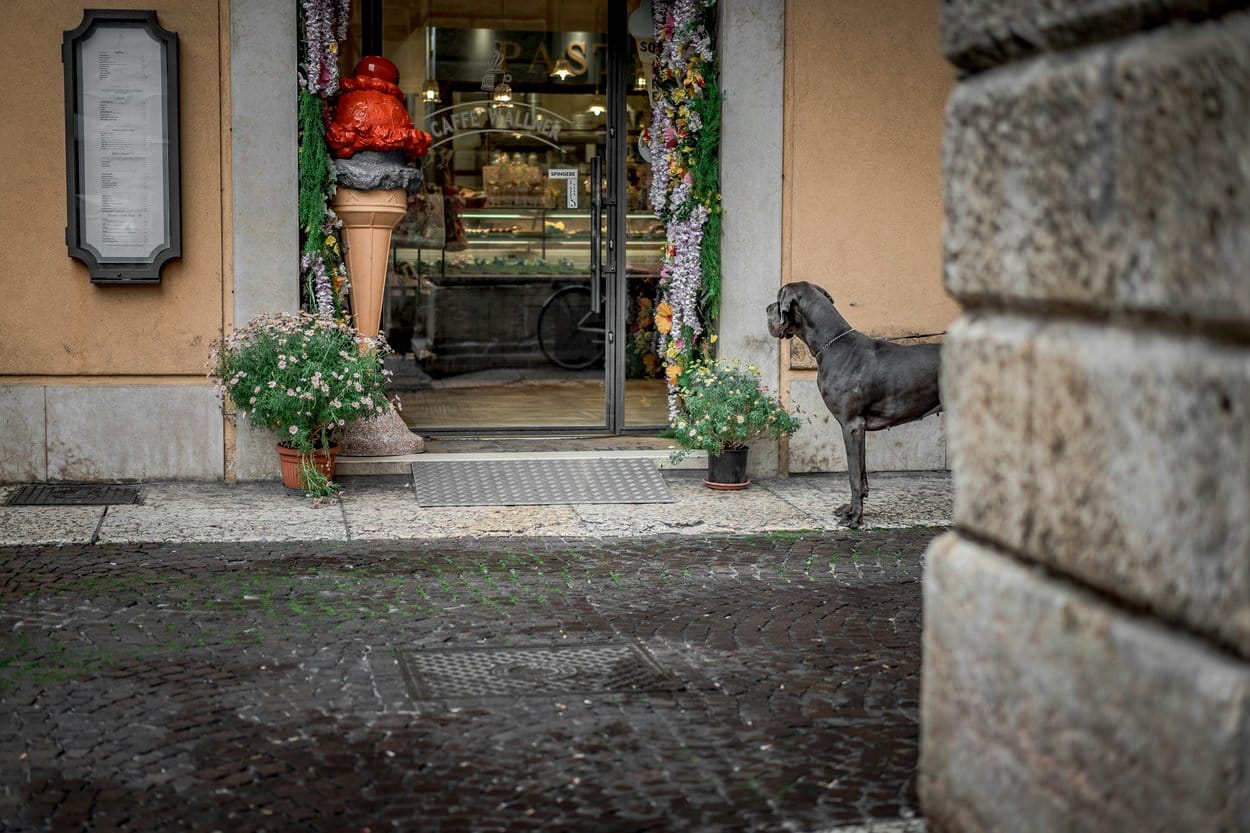
Milan's rule goes one step further, and it is the one to remember at the door. A restaurant there that will not let your dog in is not allowed simply to leave it on the pavement. It has to give the dog somewhere safe to wait while you eat, and the regulation's own example is a dedicated area with handles to tie the lead to.
Kali Concierge
Travelling with your dog? Ask Kali.
Where your dog is genuinely welcome to stay, eat, drink and walk in 50+ countries, how to cross borders with the right paperwork, and calm emergency medical advice with the nearest 24-hour vet. Free, day or night, in any language.