
What Pet Friendly Should Mean, According to 1,041 Travellers
Hotels have called themselves pet friendly for twenty years without anyone defining it. A new study asked 1,041 travellers in 66 countries what it should promise. Clear rules, real infrastructure and helpful staff came first, and almost nobody counts high fees or a selective door as a welcome.

When Nikolaos Koufodontis went looking for the scholarly definition of pet friendly, he found that there wasn't one. The phrase had been a hotel marketing label since the early 2000s, yet the handful of definitions in academic papers came from commercial websites, the Cambridge Dictionary and a master's thesis. One paper credited a definition to a source that, when he checked, does not contain it. So the University of the Aegean researcher set out to build one from evidence, and asked travellers what the words should promise.
The result, published in the International Journal of Hospitality Management in October 2026 and free to read, rests on a review of about 6,000 sources and a survey of 1,041 people in 66 countries, weighted by population and by how much each country travels abroad, drawn from countries home to three quarters of the world's people. A further 268 people answered in their own words. For anyone who has booked a "pet friendly" room and found the dog confined to it, the answers are worth knowing.
Permission Is Only the Start
Asked what a place needs before it deserves the label, respondents put infrastructure first, at 77.8%: the outdoor space, the layout and the facilities that let a dog actually be there. Clear and transparent rules came second at 76.4%, then the attitude and practice of the staff at 73.0%. Amenities, the beds and bowls and treats that fill most hotel marketing, came fourth at 70.7%. Balancing the comfort of guests with and without pets drew 62.6%, and the ethical treatment of the animals 55.8%.
The least popular item on the list was the hotel's own discretion to limit pets, which only 38.5% thought belonged in the definition. The study's conclusion is short enough to pin above any reception desk: "permission and amenities are not sufficient on their own." A hotel can let a dog through the door and leave its owner with nowhere to walk it, no idea of the rules and a front desk that sighs at the lead.
Where Travellers Draw the Line
The most revealing part of the survey put nine real situations in front of people and asked whether each one counted. A place that lets pets in, explains its rules and provides the basics won 91.3%. A destination where the hotels and the public spaces follow the same pet rules won 66.5%.
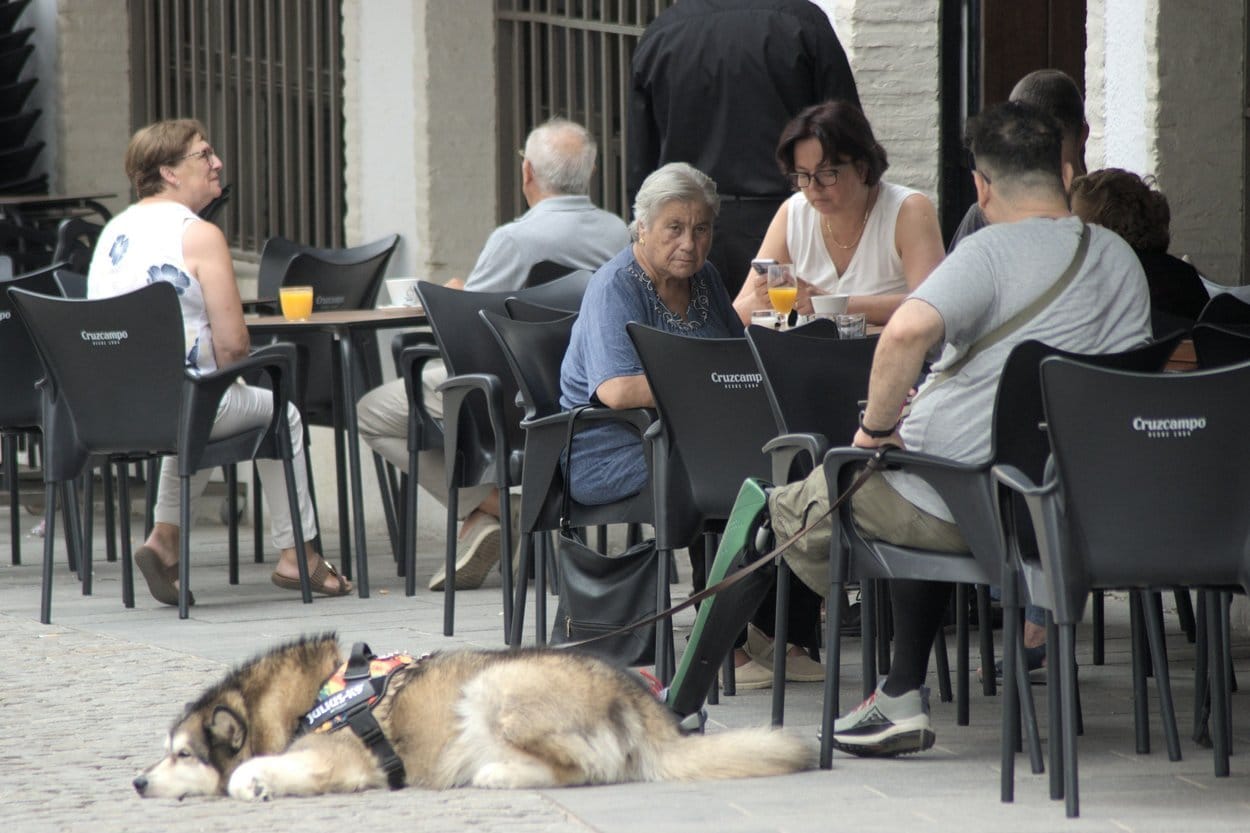
Then the support falls away. A cafe that takes dogs on the terrace only was accepted by 27.4%, and a campsite that admits pets but provides nothing for them by 27.2%. At the bottom sat the two arrangements dog owners know best from hotel booking pages. A hotel that admits some kinds of pet and turns away others was called pet friendly by just 12.0%, and a place charging high pet fees by 11.7%. Nearly nine travellers in ten, in other words, do not think a steep fee or a selective door belongs under the label at all.
Rules Are Not Restrictions
None of this is a demand for a world without limits. Koufodontis keeps pet friendly as his umbrella term and treats limits as a normal part of running a shared building. His distinction is between two kinds of control: "Restrictions are not equivalent to rules: rules structure conduct within pet-friendly settings, whereas restrictions delimit inclusion itself."
A rule tells you the dog stays on a lead in the lobby and does not sit on the restaurant chairs. A restriction decides which dogs may stay at all. The paper accepts that size, breed, number or area limits can be fair, and finds them more defensible when they exist to manage shared space rather than to keep animals out. What travellers object to is the arbitrary limit, and the hotel that hides it.
When the 268 respondents wrote freely, access came up most often, then infrastructure, rules, basic amenities and staff. Hygiene, safety, guests without pets and animal welfare were mentioned less, and the study reads them as the conditions that keep a welcome trustworthy once the obvious things are in place. A hotel with a dog menu and no answer to the guest who is allergic down the corridor has not finished the job.
The American Exception
Agreement on the core was close everywhere. The disagreement came at the edges, and it followed the map. Conditional arrangements, the terrace-only cafe and its cousins, were accepted by just over 22% of respondents in Europe and Asia and by more than 55% in the United States, a result a separate sample of 181 Americans confirmed.
Sorting the whole sample by how people answered produced two groups. The larger, 83.7%, wants rules and rejects selective bans and heavy fees: in that group the chance of accepting high fees as pet friendly was under 5%. The smaller group, 16.3%, accepts the core welcome and is far more forgiving of partial ones. It made up 26.7% of Americans and 8.5% of Asians. People who work in tourism leaned the same way, which the paper puts down to their knowing the operational trade-offs at first hand.
A hotel marketed in the United States with a weight limit, a bedroom-only welcome and a nightly fee is pitching to a home audience that is unusually willing to call that pet friendly. A European or Asian guest reading the same page is likely to call it something else.
The Hotel Dog Is Not Your Dog
The survey also asked which animals the term covers. Guests' own pets came first at 89.6%, and service animals drew 57.9%, though the paper is clear they hold a legal status of their own and should not be folded into ordinary pet policy. Two thirds, 67.2%, counted the hotel's own animals, the resident dog asleep by the fire. The paper allows that a resident dog can give a place warmth, but argues it does not make a hotel pet friendly by itself, particularly when the guests' pets are not welcome too. The charming hotel dog on Instagram tells you nothing about whether yours can come.
What It Means When You Book
Read through a guest's eyes, the study's working definition is plain. A place deserves the words when it takes companion animals on clear rules, with the space and the staff to make it work, while looking after the animals' welfare and the comfort of the people around them. Under that test the useful questions before booking are concrete ones. Where can the dog go besides the bedroom? Where is the nearest grass? What exactly are the rules, and are they written down? What does the fee pay for?
That last question matters because owners are not against paying. In an earlier survey of 343 owners, Koufodontis and Maria Melissourgou found that 63.5% would accept a pet fee if real services came with it. The objection is to a charge with nothing behind it. Our guide to what hotel dog policies really say about fees, size limits and deposits shows how to read one before you book, and Nobody Trusts Pet Friendly and Dog Friendly vs Pet Friendly explain why the label has lost the trust of the people it is aimed at. There is also a longer reading of the study written for hoteliers.
The finding to carry to the booking page is the simplest one. Asked to judge a place that lets pets in, explains its rules and provides the basics, 91.3% of people in 66 countries called it pet friendly. Asked to judge a place that only charges a lot, 11.7% did. Most of the world already knows the difference; the hotels are still catching up.

Kali Concierge
Travelling with your dog? Ask Kali.
Where your dog is genuinely welcome to stay, eat, drink and walk in 50+ countries, how to cross borders with the right paperwork, and calm emergency medical advice with the nearest 24-hour vet. Free, day or night, in any language.