
The Pine Caterpillar That Can Burn Your Dog's Tongue
Pine processionary caterpillars nest in the pines of Spain, Portugal, southern France and Italy and come down in nose to tail lines between January and May. Their hairs burn a dog's mouth. Where and when to expect them, and why the first six hours decide how much of the tongue is saved.
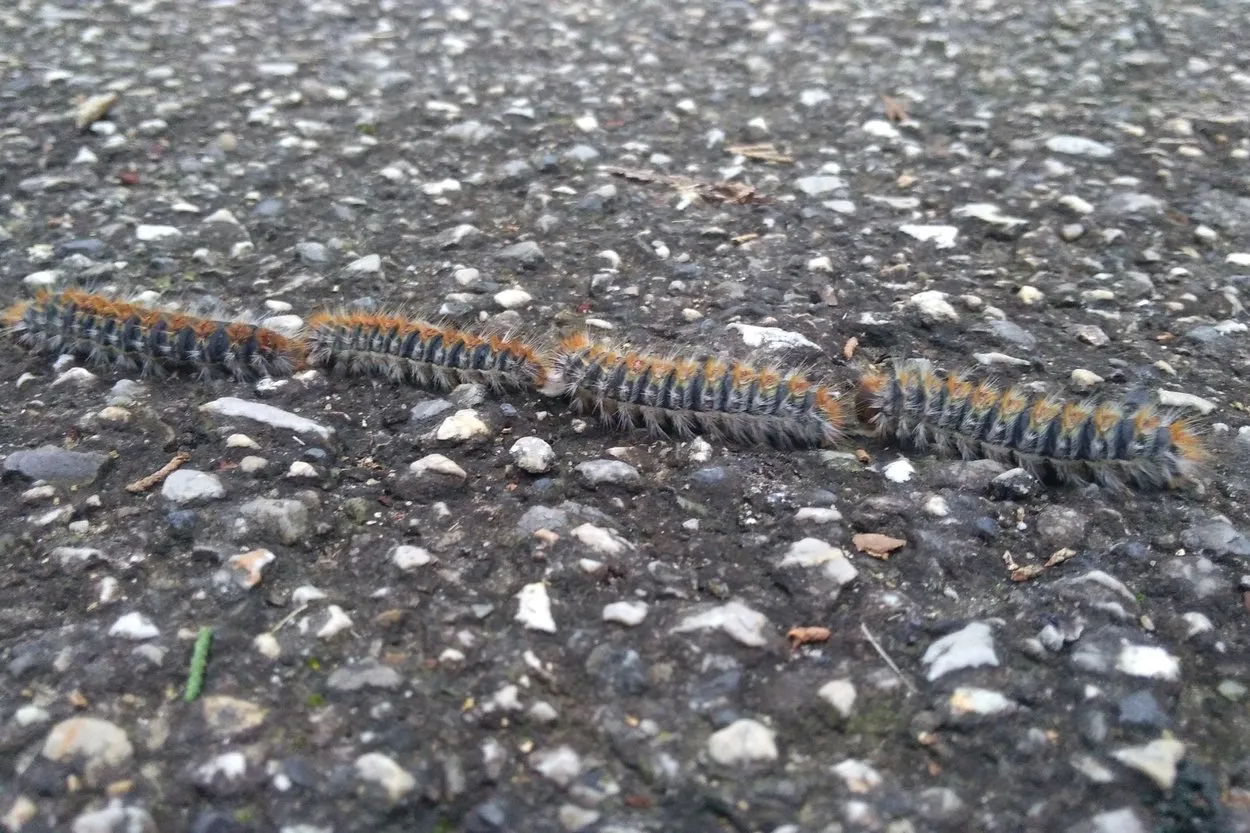

On a sandy path under the pines in February, what looks like a length of furry rope is crossing in front of you: a line of caterpillars, each touching the tail of the one ahead, on its way to bury itself in the ground. These are pine processionary caterpillars, the young of a moth that lives in the pine woods of southern Europe, and their hairs burn. A dog that noses or licks the line can end up with a swollen tongue and, if nobody acts quickly, lose part of it for good. In France, where the food and health safety agency ANSES collects the reports, dogs make up 92% of the animal cases and cats about 7%.
Where and When
The caterpillar feeds on the needles of pines and cedars. A leaflet from the Cascais council in Portugal, drawn from the national forest authority, lists Portugal, Spain, the south of France and Italy, except Sardinia, among the countries where it lives, with its range running on to Greece and Turkey. ANSES puts it across a very large part of France, mainly the south, the centre and the west.
The season is the part a traveller needs. ANSES says the pine processionary is met mostly between January and May, and also between October and December in France's oceanic regions on the Atlantic side. The Government of Aragón tells walkers to take most care from February to April, when the caterpillars come out in lines, and the Comunidad de Madrid runs its campaign against them every year from March to May. A late winter week on the Algarve, an Easter break in Provence or a spring drive to Andalucía all fall inside it.
France has a second species, the oak processionary, which lives on oaks and is seen mostly from April to July, chiefly in the north east, around Paris and in the north west. Its hairs sting in the same way, so a dog walked in the oak woods of northern France in early summer meets the same risk under different trees.

How to Spot Them
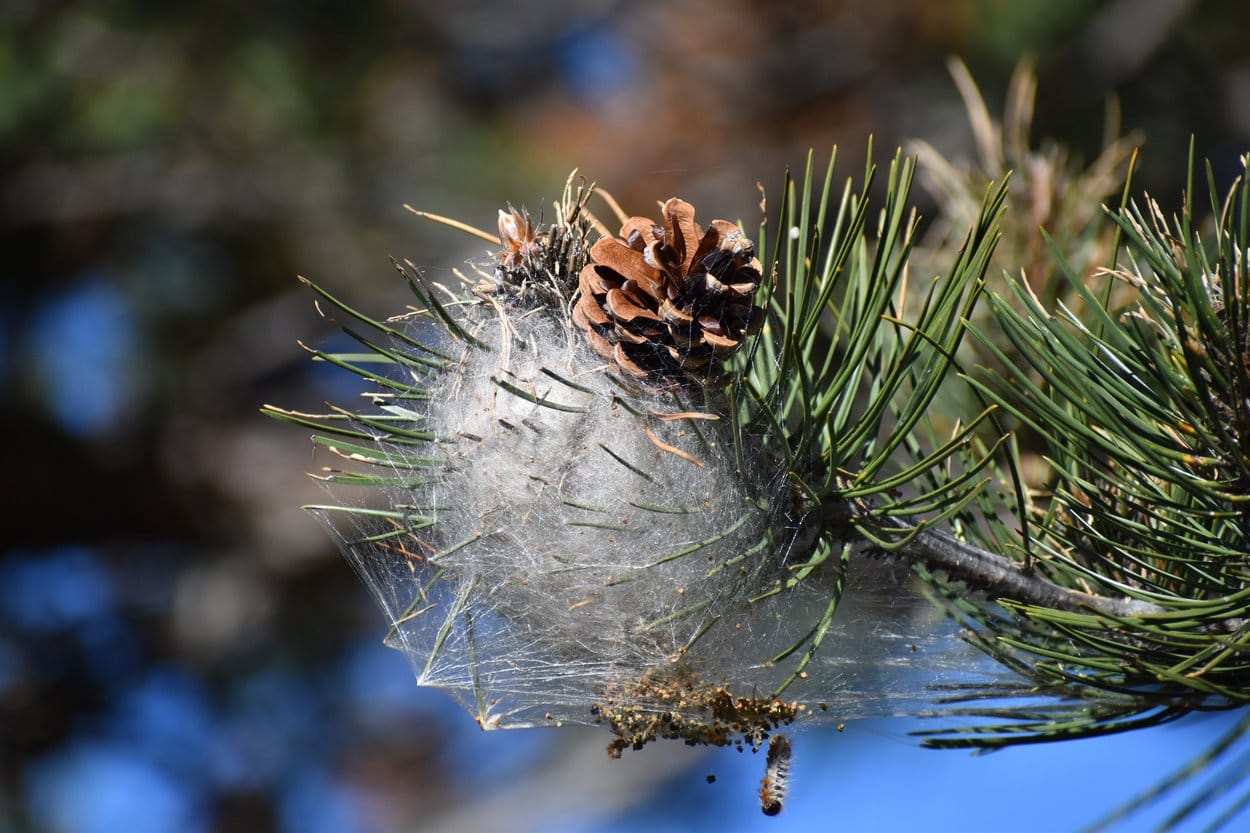
Look up first. Through the autumn the caterpillars spin a nest of white silk, usually at the tip of a branch, and spend the winter inside it; the Umbria regional plant health service says the nests can be seen on the pines from December. Aragón's leaflet adds that the colonies leave the nest at dusk to feed on the needles. A pine wood hung with these white silk nests is a wood to walk through with the dog close beside you, or not at all.
Then look down. When winter ends the caterpillars leave the tree and walk in procession, usually behind a female, to a clearing where they burrow into the soil and turn into chrysalises. The procession is what catches a dog's eye. As the canton of Geneva's advice for dog owners puts it, curiosity can lead a dog to lick the caterpillars on the ground, and a slow moving line at nose height is made for exactly that.
What the Hairs Do
The caterpillars carry stinging hairs on their backs and shed them when they are disturbed. ANSES warns that the wind carries the hairs easily, so a dog does not even need to touch a caterpillar or a nest to be affected, and Aragón lists three ways in: contact, swallowing and breathing the hairs in. In animals the damage is mainly in the mouth, though the paws and the gut can suffer too, and the Umbrian service warns that dogs can be harmed, sometimes very seriously, on the tongue and the nose.
The best record of what happens next comes from the intensive care unit of the vet school in Lyon, which published a study of 109 dogs treated there between 2000 and 2016. Some 86% had lesions on the tongue, from swelling to severe necrosis, where the tissue dies. More than half showed signs elsewhere in the body, most often vomiting, and a few struggled to breathe. Geneva adds that in an allergic dog the reaction can be violent, with the throat swelling or the dog going into anaphylactic shock.
The First Six Hours
The Lyon team sorted the dogs by one thing: how long it was from contact to the first time the mouth was flushed. In the dogs flushed within two hours, and in those flushed within two to six, 5% already had a dying patch of tongue when they arrived. In those flushed after more than six hours it was 45%, a risk more than fourteen times higher, and they were far more likely to go on developing necrosis while in hospital too.
The outlook is better than the pictures suggest. Of the 109 dogs, 97% survived and most needed only a short stay. Of the 69 the team could follow up, 23 were left with part of the tongue permanently lost, without, the authors write, major consequences on their quality of life. The finding they put first is the one to remember: the best results came when the mouth was flushed within six hours of contact.
What to Do
Do not touch the caterpillars with your hands, and move the dog away from them. Then, following Geneva's advice, rinse the tongue and the whole mouth with plenty of clean water, and do not rub, because rubbing breaks the hairs and releases more of the irritant. Carry water on any pine walk in the season.
Then treat it as a veterinary emergency, as Geneva does, even if the dog seems better: how badly the tongue is damaged can only be judged after a few days. ANSES tells owners to see a vet or call a veterinary poison centre; in France those are the CAPAE-Ouest at the Nantes vet school and the CNITV at Lyon, and both take calls from owners as well as vets, from half past eight in the morning until midnight. Anywhere else, our guide to a dog falling ill on holiday covers finding an emergency vet in a country you do not know.
Walking Under the Pines
Aragón's advice for the season is simple: keep away from pine woods where the caterpillars are, keep the dog under close control and stop it reaching them. If a procession crosses the garden of a house you have rented, the Umbrian service suggests wetting the ground along its path so the hairs stay down rather than lifting into the air, and it warns never to set fire to a nest, because the smoke scatters the hairs. A nest in a public place is a matter for the town hall; in Umbria residents are asked to report one so the council can take it down before spring.
The caterpillars are only one of the south's hazards for a dog. Sandflies, ticks and mosquitoes are another, covered in what your dog can catch on holiday in southern Europe. This one runs on a clock. In the Lyon dogs, flushing the mouth inside six hours rather than later was the difference between 5 dogs in a hundred arriving with a dying tongue and 45.

Kali Concierge
Travelling with your dog? Ask Kali.
Where your dog is genuinely welcome to stay, eat, drink and walk in 50+ countries, how to cross borders with the right paperwork, and calm emergency medical advice with the nearest 24-hour vet. Free, day or night, in any language.