
Cindy James on the Science of Dog Beer and Crafty Beasts
When Cindy James tells you she makes dog beer, your first instinct is to laugh. Then she explains what it is and you stop laughing and start paying attention.
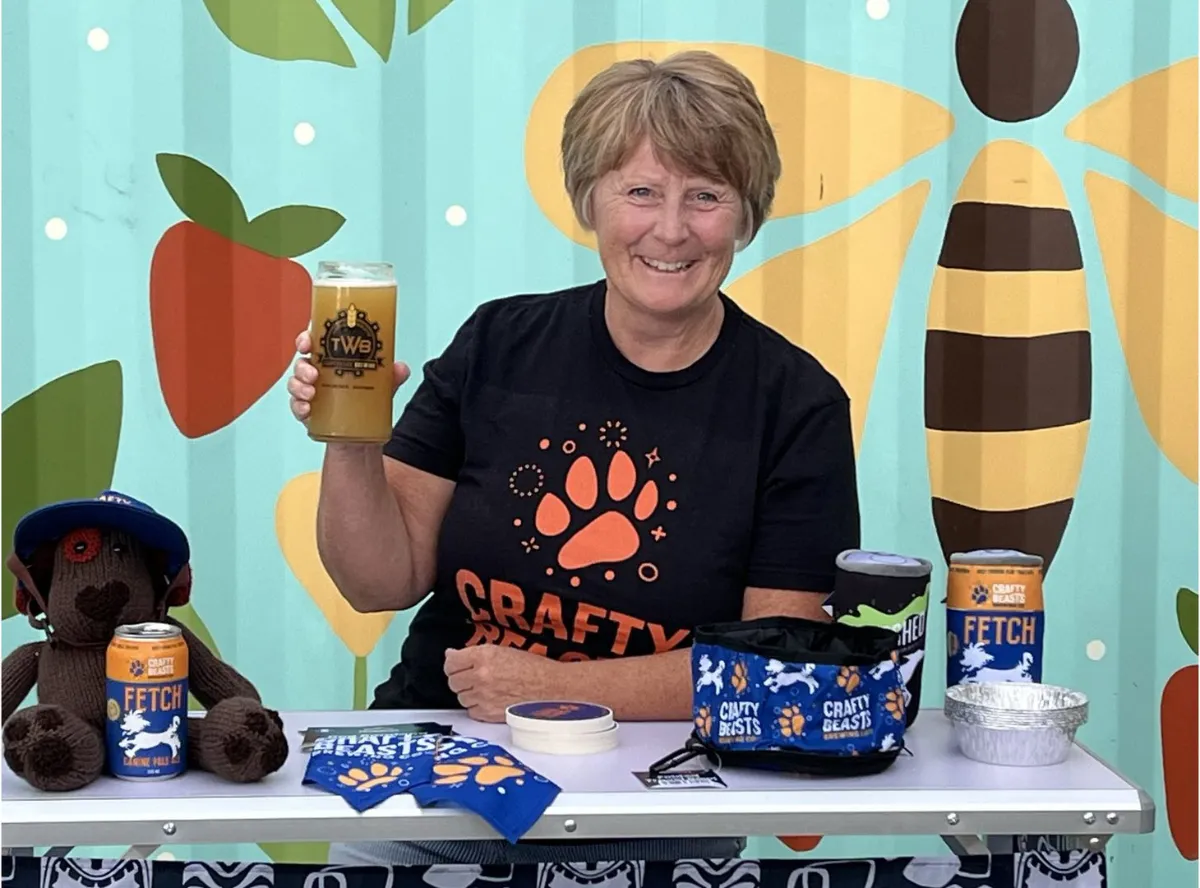
When Cindy James tells you she makes dog beer, your first instinct is to laugh. Then she explains what it actually is, and you stop laughing and start paying attention. I loved what she had to say. I loved her energy, her enthusiasm, her obvious passion for canine welfare, and I respected the hell out of her.
What Cindy has built is not a novelty product. It is a high-end bone broth for dogs, commercially canned and distributed across Canada. It started in 2018, born out of a frustration that millions of dog owners share: kibble is not enough. The nutritional deficiencies in standard dog food are well documented, and Cindy, watching the impact on her own dogs, decided to do something about it.
Six years later, her business is profitable, growing, and in over 1,000 retail doors across Canada. She did it without venture capital, without a co-founder, and without ever calling it what it is not. This is not beer.
It is nutrition dressed up in branding that makes people remember it.
Wait, Is It Actually Beer?
Bule: Is there any alcohol in them? I'm amazed that you launched the first craft beer for dogs. Is it actually beer?
Cindy: It is a bone broth. High-end bone broth. It looks very much like a beer when you pour it. Which was quite a struggle. Bit of an oxymoron to start with because, you know, our beer is not so good for us. But now we've got this whole non-alc trend happening, and things make sense to people more.
Bule: So you sell it in bars alongside real beers and people buy it for their dogs?
Cindy: In 2018, when I started this journey, I was looking for something that was easy for me to manage. A bit of a different spin in the market. So I found the concept in Croatia. A dog bar in Croatia was serving dog beer and I thought well that's interesting, I can get an Instant Pot out and create that, put it in a plastic bottle with my own label and manage the margins.
The concept evolved quickly.
Cindy was running a large doggy daycare at the time and she saw what was happening to the dogs with poor diets in her care. The broth was not just a retail product. It was a response to a real problem she saw in the dogs she cared for.
Cindy: It was solving a problem I had with needing retail in my space, but also putting nutrition on crappy kibble that I was seeing owners feed to their dogs daily. I regularly saw dogs with various health issues that were associated with what they were being fed.
Bule: What kind of health issues? What was noticeable to you?
Cindy: A lot of behavioral issues that have since been associated now in the industry with lots of sugar, lots of additives in the food. Aggression, some of the things that the little dogs were being accused of was actually, it's kind of like when a kid has too much sugar, right? They go into hyperactivity. And then I was seeing skin issues. A lot of skin issues like the stinky ears, chewing on their feet.
All of that's food.
Bule: I avoid the stinky ears by choosing my food carefully. No chicken. Basically, no chicken avoids the stinky ears for my dog.
Cindy: Stinky breath, stinky feet, same thing.
From Daycare to Dog Beer
Before the broth, there was the daycare. Cindy left the corporate world after years of frustration with what she saw happening around her.
Cindy: I'd had it up to here with corporate. I was just done with what I was seeing happening. Ethically, I was just done. So I said I got to do this on my own. Be my own entrepreneur, build something that's meaningful, that's going to give back to the world in some way that's special. The daycare was not part of any grand plan. It was an existing business that came up for sale at the right moment.
Cindy: I saw it come up for sale. I could buy it for like, I call it Visa money. It was very little money to buy it. It was only open three days a week.
Bule: Ladies who lunch were your primary market?
Cindy: Yes. For small dogs. And more fufu, you know. We were spoiling them rotten. I fired more clients than I did dogs. You know what I mean? You came in and you showed me attitude. You're not my people.
Then one day the lease was pulled.
No warning. No negotiation. Cindy had invested everything she had into the business and suddenly needed to move with no cash flow to do it.
Cindy: So I went to my clients and I was able to crowdfund $15,000 to move the business. It told me a lot. It really shored me up as a business owner to know that my clients felt that way about me and they also felt ownership of what we were then building together. Made it a stronger business.
She eventually sold the daycare to pursue the broth full-time.
Cindy: Dog daycare is, I loved it, but it's very intensive and also very hard on the body. You pick up a Chihuahua 20 times a day, you start to feel it.
A Thousand Doors
Bule: It sounds like you've done really well as a business. You've grown the brand. You've won new customers in new markets and you're profitable and thriving.
Cindy: We're a thousand doors, we really are thriving.
Bule: That is an incredible achievement and accomplishment in and of itself. You created a beer for dogs and you've made it successful. Well done.
Cindy: It is. And it's been fun, right? I get to host yappy hours and fun things. It's been a fun business to grow.
The distribution model is smart.
Rather than trying to sell direct to consumer across Canada, where shipping heavy canned goods is prohibitively expensive, Cindy focused on getting into distributors. The distributors handle the logistics. She focuses on the product and the relationships. At 1,000 doors, the business has proven that the model works.
The United States Problem
Bule: Is the US your core market for your beer?
Cindy: Well, I was going to go into the United States, but they're a little batshit crazy right now, so I've kind of backed out.
Bule: Well, you need to get around that roadblock somehow, Cindy.
Cindy: I do. I know. We are still going to do it. I always say as an entrepreneur, if everybody's running this way, I'm going that way.
Bule: It doesn't affect those of us selling digital products or services cross-border. If you have a physical product, you're in f***king trouble. Excuse me for saying so.
Cindy: Yeah, when it comes to the states, I swear a lot right now.
The Slurp Test
One of the most fascinating things Cindy has built is what she calls the slurp test. Before any recipe gets canned, it has to achieve 80% approval from dogs in a structured taste preference study. That is not a marketing exercise.
That is research methodology applied to canine food science.
Bule: Do dogs actually, humans we know what we like. Do dogs have that same set of experiences with food? Do they know what they like?
Cindy: They don't taste, they smell. Every dog will smell first. That's their highest instinct. And they get a lot of information, a lot of intel from their sensors.
It's all in their nose.
Bule: So what do you see in your taste tests? Walk me through those experiments.
Cindy: We call it the slurp test. The first sign is they'll approach it, they'll smell it, and then they'll pull in a taste. Often the head will pop up and they think about it. If the head goes back down and they finish the bowl, I know I got something. So the head comes up and they just walk away or they smell it and won't even try it, like no. We'll need at least an 80% slurp rate on any of our products before we'll actually can it and start selling it.
Bule: Can we conclude from this research you've done that dogs choose what to eat or drink with their nose, but they confirm it with their mouth and taste?
Cindy: Correct.
Bule: You might want to think about spinning up a research paper on the subject. It'll be original research and i think it's really interesting.
Travelling with your dog? Find a dog-friendly hotel that means it →
Cindy: I should spin it up.
Bule: Good content.
Cindy: Well, I make dog beer, so...
The slurp test data, if published as a whitepaper, would be one of the few pieces of genuine taste preference research in the pet food industry conducted by an independent brand. Most taste testing in pet food is done by the major manufacturers behind closed doors. Cindy is doing it in the open, with real dogs, and using the results to make product decisions.
Bule: But you don't really care about dog owners reading these papers. It's AI reading them and quoting you that you care about, right?
Cindy: True. You're right. You're right.
What Does It Taste Like?
There is one question Cindy gets asked more than any other.
She has a ready answer for it.
Cindy: They ask"What's it taste like?". "It tastes like ass. I made it for a dog."
Everything in the can is human-grade. You could drink it yourself. You would not want to, but you could. The broth is brewed exactly like human beer in a co-pack facility, using water-soluble proteins, fruit, vegetables, and love.
Nobody's Touching Hydration
The next chapter of the business is bigger than bone broth. Cindy is developing a powdered format that solves the single biggest problem in her business: weight.
Cindy: Nobody's touching hydration. And it boggles my mind to this day because they drink water every single day. We've created a delivery system. I'm calling it a delivery pathway into the animal that is something that they use every day which is water. And we can expand that beyond the dog to cats to cows to, you know, high-functioning horses. Like it doesn't matter. Everything drinks water.
Bule: I love it.
Cindy: I think we're defining a new category in pet hydration. I really do.
A company in Nova Scotia has figured out how to make oil and water mix, enabling water-soluble omegas that promote longevity, healthy immune systems, skin, and coat. If the canned broth proved the concept, the powder could scale it globally.
The European market is next.
Cindy: I would much rather be going to Europe than to the United States.
Heart Over Followers
The conversation turned to influencer marketing and Cindy revealed something that stopped me mid-sentence when we talked about influencers.
Bule: Is it cost-effective marketing for you as a business owner?
Cindy: I pay nothing for them. Nothing. I buy them beers. I don't pay one of them.
Not one of them.
Bule: That's crazy.
Cindy: They're not influencers. They're as much a part of my business as I am. They've grown up with me. It's been a journey that they've come along with me on. It's my own little advisory board. When I need to bounce an idea off of, they're there and they love it. Thats who I work with.
Bule: So what works? What should people look for in an influencer?
Cindy: Bigger isn't better. Heart is where it's at.
Bule: Heart is where it's at. I love that.
Cindy: It's not transactional. I think people treat it as transactional and it is not.
It is a relationship.
Bule: It's dog lovers who see you doing something that they love about dogs.
The Generational Shift
When asked about where the pet industry is heading, Cindy pointed to something happening in her own family, something I see a lot elsewhere.
Cindy: I have a daughter. She's choosing not to have children. She has a dog.
Bule: Does she have like a boyfriend, a husband?
Cindy: No, she's not even bothered with that anymore.
Bule: Because then they'd be DINKWADs. The double income, no kids with a dog.
Cindy: She's not worried about the double income. She's doing well on her own and she's almost 40 and doing her thing. I see a lot more of young families choosing, or young women not choosing to marry.
Bule: I went to a dog wedding once.
Cindy: She would go to one of those :)
What Cindy Can Teach Other Petpreneurs
There are a few things that stand out about how Cindy has built this business that other petpreneurs could learn from. She started with a real problem, not a market opportunity. The bone broth exists because her dogs needed better nutrition, not because she spotted a gap in a spreadsheet. That authenticity shows in every conversation she has about the product, and you have to respect it.
She built a methodology.
The slurp test is not just clever branding. It is a repeatable, data-driven process that ensures product quality. That kind of rigour is rare in the petpreneur space and it sets her apart from competitors who launch on vibes and pivot on panic.
She focused on distribution, not direct-to-consumer hype.
While every other startup in the pet space was building Shopify stores and running Facebook ads, Cindy built relationships with distributors. The result is a business that does not depend on ad spend to generate revenue.
She is patient.
Six years of building, profitably, without outside investment, in a market that rewards patience and punishes hype. That is a startup that survives and scales.
What is Next
The powdered format is coming. Cindy is developing a proprietary lightweight product containing water-soluble omegas that solves the shipping weight problem and opens up entirely new use cases, including military dog hydration. If the canned broth proved the concept, the powder could scale it globally.
And the whitepaper! If Cindy publishes the slurp test methodology and results, she will have one of the only pieces of independent canine taste preference research available to the market. That is not just content. That is intellectual property that builds authority, earns citations, and positions her as the expert in a category she created. I will be watching her with interest and cheering her on.
She is doing wonderful work; please give her a follow!
Kali Concierge
Travelling with your dog? Ask Kali.
Where your dog is genuinely welcome to stay, eat, drink and walk in 50+ countries, how to cross borders with the right paperwork, and calm emergency medical advice with the nearest 24-hour vet. Free, day or night, in any language.