
Air Canada Just Did Something the Rest of the Industry Has Been Avoiding
A national airline now asks for proof that a service dog is fit to fly, instead of taking it on trust. A small programme with a very big idea underneath it.

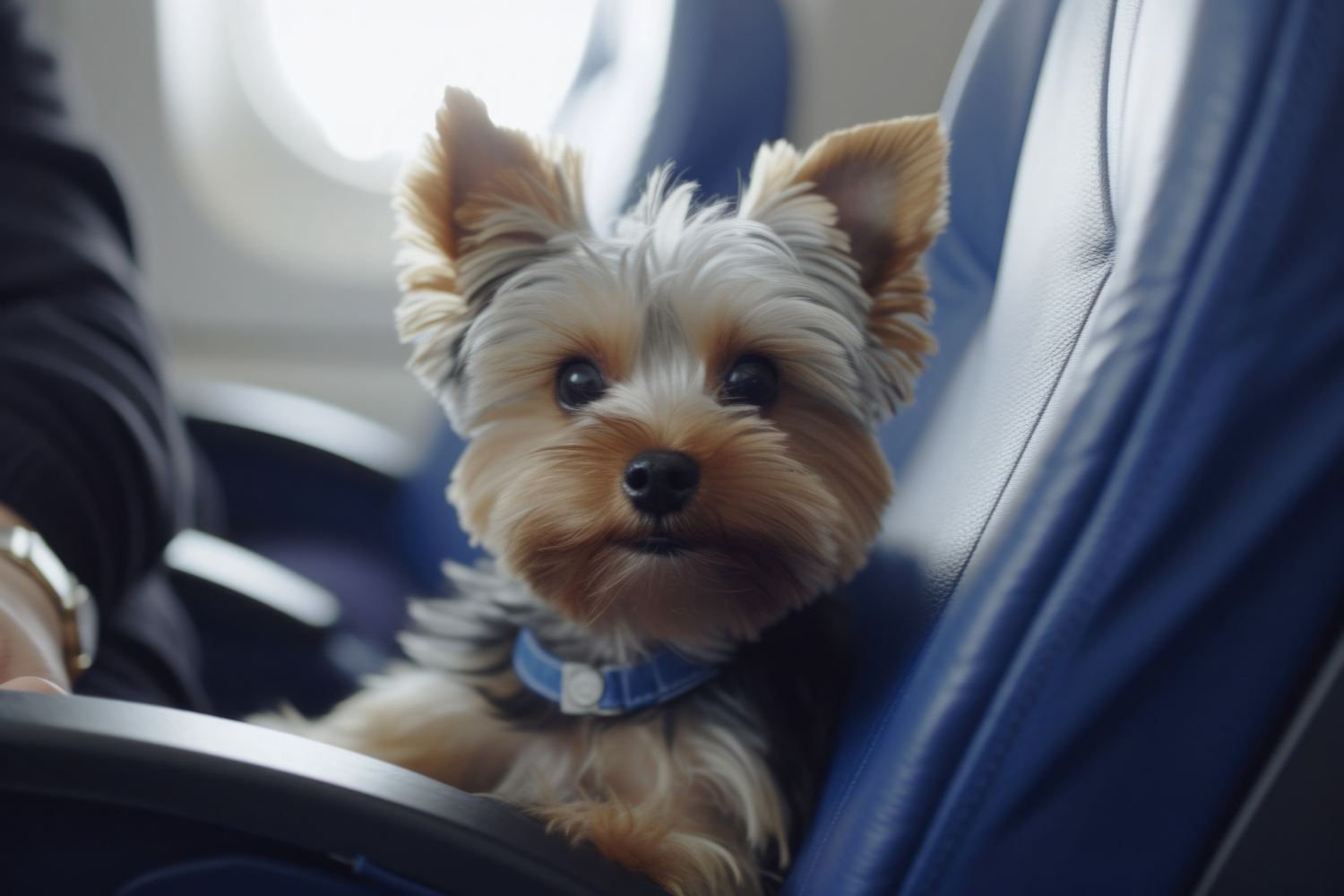
For as long as service dogs have boarded aircraft, the whole system has run on one thing. The owner's word. You walk up to the gate, you say the dog beside you is a trained service animal, and a member of staff who has no way of checking has to decide on the spot whether to believe you. It is awkward for the handler, awkward for the airline, and wide open to anyone willing to lie.
On 2 June, Air Canada decided it had had enough of guessing.
How it works
The airline has partnered with K-9 Country Inn, a Canadian non profit that has been training dogs for over forty years and assessing service dogs since 2013, to launch a programme called Cabin-Ready Canines. The idea is simple and it is overdue. Instead of trusting a claim, Air Canada will trust an assessment.
A dog trained by its owner sits a proper examination covering obedience, task work, public access and outdoor manners. The handler brings confirmation from a doctor that they need the dog. Pass it, and you walk away with a certification and a photo ID card, valid for two years, that any agent can check against a live database.
Planning your next trip with your dog? Browse dog-friendly hotels →
What I like most is that Air Canada keeps its hands off the test itself. Its accessibility team refers the customer, the non profit does the assessment, and the airline simply trusts the credential it gets back. That separation matters. The people deciding whether the dog passes are not the same people selling the ticket.
Why it had to exist
Why build this at all? Because Canada has no national standard for service dogs, and neither does most of the world. A few provinces run their own schemes, British Columbia, Alberta and Nova Scotia among them, but the coverage is patchy and the gaps are real. An owner who trains their own dog, which is hard and serious work, has had no credible way to prove it to anyone who asks. When you leave a vacuum like that, it fills with rubbish. The fake letter bought online. The novelty vest off a marketplace. The confident assertion that nobody can check. That is exactly what a real assessment kills.
Kerianne Wilson, Air Canada's Director of Customer Accessibility, framed the launch around independence, and she is right that service dogs play a vital role in customer independence. Laura MacKenzie, who founded K-9 Country Inn and runs it, made the sharper point. Owner trained service dogs support thousands of Canadians, and until now there has been no consistent way to demonstrate it. The programme exists to fix precisely that.
It is a modest start, and I respect that more than a grand launch that collapses under its own promises. Testing runs in the Toronto and Montreal areas for now, in English and French, and K-9 Country Inn says it will follow demand into markets the government schemes do not reach. Dogs already certified by a province, or trained through recognised bodies like Assistance Dogs International or the International Guide Dog Federation, are exempt and do not sit it twice. It covers domestic and international travel, with one exception. The United States, where the paperwork is governed by American law, is out of scope.
The point most people will miss
Here is why a small accessibility programme matters far beyond the people it directly serves. It is a working example of the thing I have been arguing since I started this company. Trust is not built on a claim. It is built on a credential. Not a label anyone can print, but an assessment a serious body will stand behind, carried on something that can actually be checked. Air Canada and K-9 Country Inn have just proven the model works at a boarding gate.
It is the same disease everywhere you look in dog friendly travel. The hotel that advertises a welcome it does not deliver. The booking filter that treats a five kilogram weight limit and an open door as the same thing. The pet fee attached to nothing. When we assessed over 2,000 hotels across 56 countries, 49% of the ones calling themselves pet friendly scored D or F.
They tick a box. Nobody checks what the box means. Allowed is not the same as welcome, and a label is not the same as proof.
A photo card a gate agent can scan does not look like a revolution. The logic underneath it is. Assess the dog once, let the proof travel with the owner, and stop asking everybody to simply take your word for it. Air Canada has applied that logic to the cabin. The rest of the industry should be paying very close attention.

Need a hand? Talk to Kali.
Our free dog‑friendly concierge knows where you and your dog are genuinely welcome to eat, drink, stay and walk, plus the nearest emergency vet when it matters. Instant, in any language.