
Does Your Dog Know How Long You Were Gone?
Two small Swedish studies filmed dogs left at home and measured how they greeted the person who came back. After two hours the welcome was far bigger than after thirty minutes, and a calm hand on the dog brought its cortisol down furthest. What the research shows, and what it cannot.
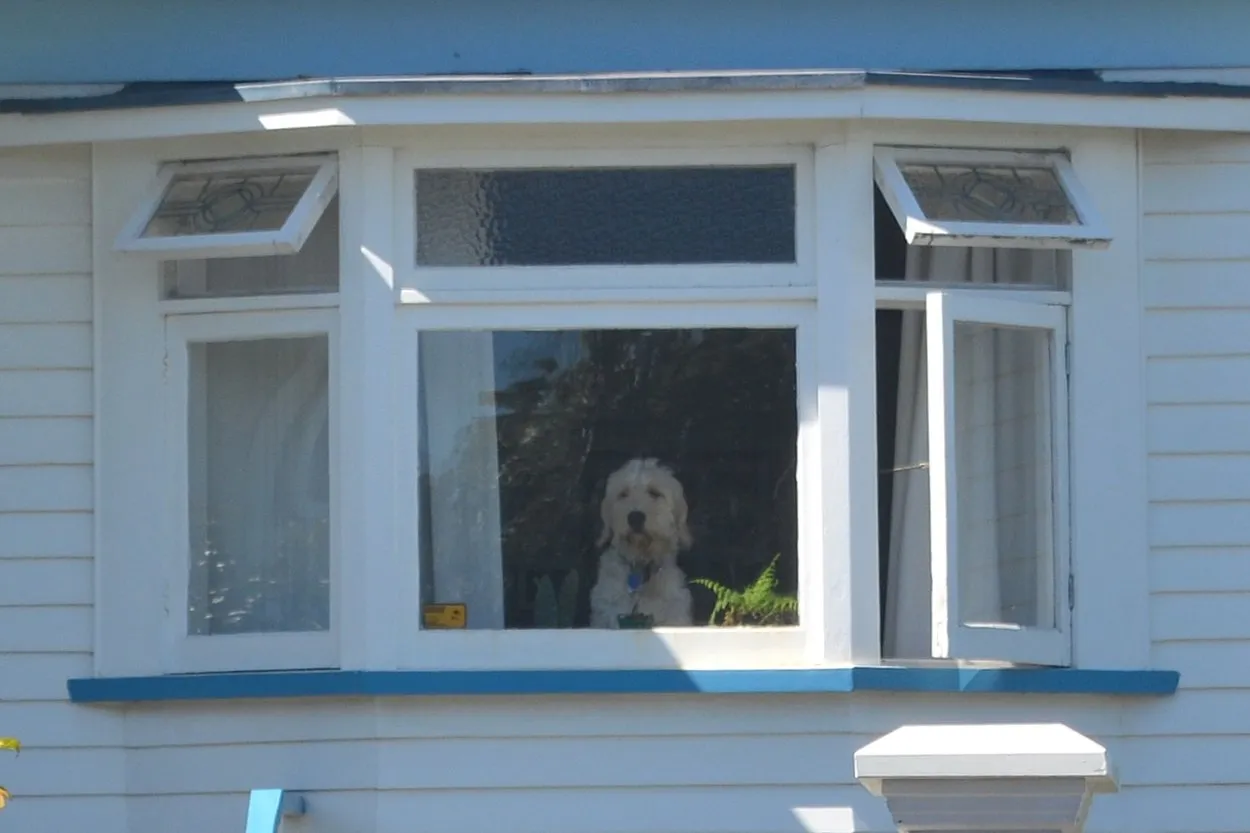

Twelve dogs in Swedish homes were filmed on three separate days as their owners walked out of the door. On one day the owner came back after half an hour, on another after two hours, and on the third after four. The camera started ten minutes before the owner left and ran until ten minutes after the return, and each dog's heart rate was recorded over the same stretch. All twelve were privately owned family dogs, and none had any history of the problems some dogs show when they are left alone.
The study, published in Applied Animal Behaviour Science by Therese Rehn and Linda Keeling of the Swedish University of Agricultural Sciences, sits behind nearly every article on whether a dog can tell how long you have been out. Most of those articles say more than it did. What it actually found is narrower than the retellings, and more useful to anyone who leaves a dog for an evening.
Nothing Changed Until the Door Opened
While the owners were out, the dogs behaved the same whichever day it was. Compared moment for moment, a dog half an hour into a four hour absence was doing much what it had done half an hour into a short one. The differences all came at the door.
After two hours away, the owners were greeted with about three times as much tail wagging as after thirty minutes, and the dogs interacted with them more than three times as often. They moved about more, paid the owner more attention, licked their lips more often and shook their bodies more. Heart rates ran higher too in the first two minutes after a two hour absence, at around 128 beats a minute against 106 after half an hour, though the authors report that only as a tendency, short of firm statistical proof.
Two Hours, Four Hours
On the greeting itself, the four hour figures were much the same as the two hour ones. Tail wagging, contact with the owner and attention at four hours sat close to the two hour level, and on attention and interaction a shade below it. Only general activity went on climbing. The authors' own conclusion is that the effect showed already after two hours. Whatever a dog takes in about an absence, a second two hours added little to the welcome.
This is the point where the retellings go astray. The study did not show that dogs keep track of time. The authors write that they cannot tell whether the dogs knew how long they had been alone and simply did not show it, or had no idea until the owner walked back in and reminded them. What they could say is that the length of the absence affected the dogs. A greeting was what they measured, in twelve dogs, across three lengths of absence.

How You Say Hello
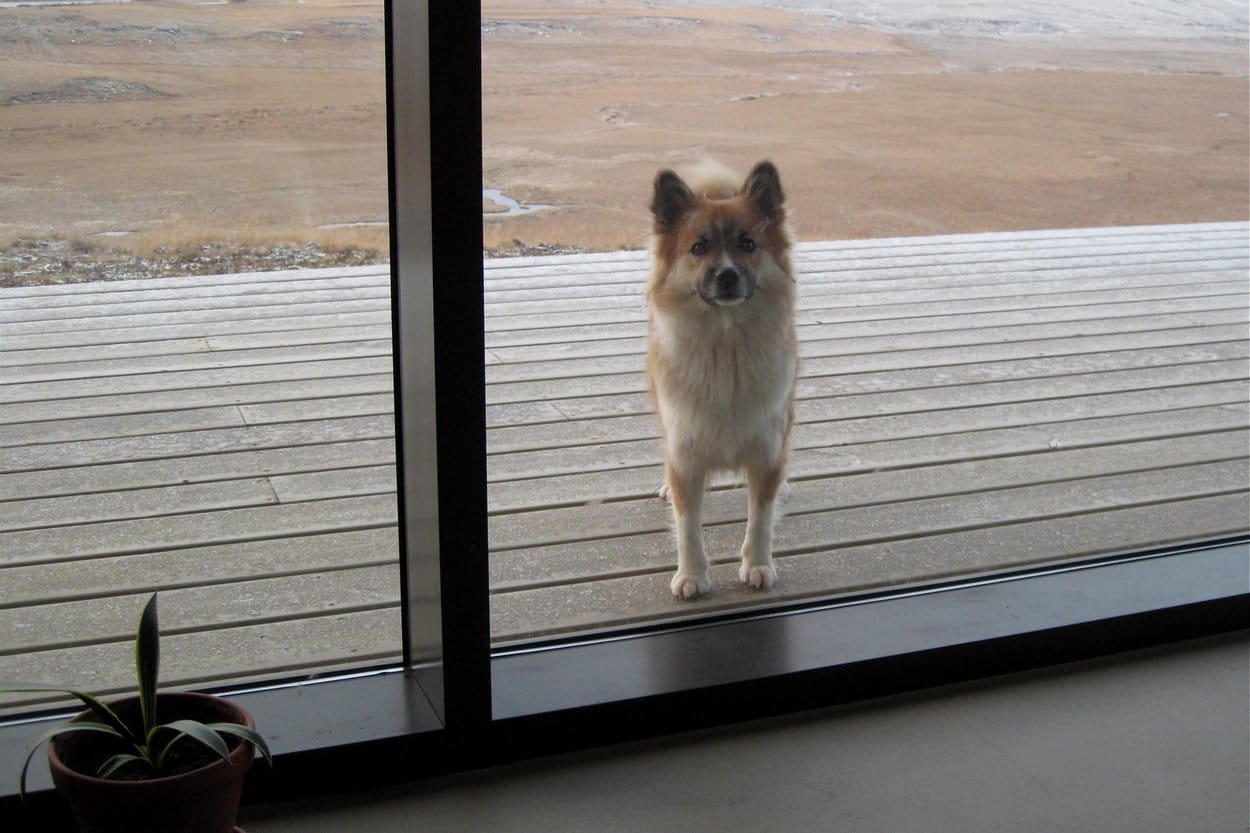
Three years later Rehn and Keeling, with Linda Handlin and Kerstin Uvnäs-Moberg, turned from the dog's greeting to the person's. In a study published in Physiology and Behavior in 2014, twelve female beagles were left by a familiar person in a test room they had already grown used to, and each dog went through three kinds of return in a balanced order. In one the person came back and gave calm, friendly physical and verbal contact. In another the person spoke to the dog but did not touch it. In the third the person ignored the dog altogether. Each return ran for four minutes to a set script, and blood samples tracked two hormones, oxytocin and cortisol.
Oxytocin rose in every case as soon as the person came in, probably, the authors think, at the sight of them entering and walking over. Only touch kept it raised after the four minutes were over. Cortisol fell through the test whatever the person did, and fell furthest after the calm physical contact.
The dogs that were touched sought more contact in return and licked their lips more, while the dogs that were only spoken to greeted the person with wagging tails and vocalising. The ignored dogs may have turned their approach to an assistant who stayed in the room throughout. The authors' conclusion is plain: "physical contact was necessary in order to induce a sustained increase in oxytocin levels", and the drop in cortisol after the reunion came with it.
The usual caution applies with some force. Twelve beagles, all female, all met by a familiar person in a test room, is a small and particular group. It says a good deal about how a greeting lands, and nothing about how long any of them had been waiting.
A Big Welcome Is Not a Measure of Love
A third study from the same group warns against reading too much into the welcome itself. In I like my dog, does my dog like me?, published in Applied Animal Behaviour Science in 2014, Rehn, Ulrika Lindholm, Keeling and Björn Forkman watched how twenty dogs behaved with their owners compared with a stranger, and asked the owners how they saw the relationship. Owners who interacted with their dogs more often had dogs that sought more closeness when reunited and played less on their own. How emotionally close the owners felt to their dogs bore no relation to any of it.
The authors offer two readings: the dogs may simply have been rewarded for staying close, or they may have formed something like the anxious attachment seen in some children. Either way, an exuberant greeting tells you about habit and history as much as feeling. A Finnish study of nineteen dogs, all regularly left for three hours or more, adds a small piece from daily life: over two weeks of collar tracking, the more active dogs seemed calmer to their owners when left and more pleased when they came home. Its authors note that the links were weak and that correlation is not cause.
Leaving a Dog in a Hotel Room
None of these studies was done in a hotel. The Swedish dogs were at home, and a strange room is a different matter: sleep recordings from Budapest, covered in Why Your Dog Sleeps Badly the First Night Away, found that dogs unused to sleeping away from home sleep lighter and later the first time somewhere new. Whether you may leave a dog in the room at all is down to the hotel, and the rules vary from an outright ban to a crate to plain permission, set out in Can You Leave Your Dog Alone in a Hotel Room?
Where the hotel says yes, the research gives a fair picture of what to expect. An evening at dinner can easily pass the two hour mark at which the Swedish dogs' greetings grew, so a bigger welcome than after a dash to reception is no cause for worry; it is what twelve settled family dogs did at home. Staying out longer did not make the welcome any bigger in that study, though it was never designed to say how long is too long. For the time apart itself, the stress studies we covered in Kennels or Come Along? show how hard it is to read a dog's feelings from a number.
The part the evidence is clearest on is the return. A voice alone brought wagging and vocalising, and an ignored dog seemed to go looking for someone else. In the Swedish beagle study it was the dogs that were met with a calm hand as well as a voice whose oxytocin stayed up and whose cortisol fell furthest.

Kali Concierge
Travelling with your dog? Ask Kali.
Where your dog is genuinely welcome to stay, eat, drink and walk in 50+ countries, how to cross borders with the right paperwork, and calm emergency medical advice with the nearest 24-hour vet. Free, day or night, in any language.