
Can You Leave Your Dog Alone in a Hotel Room?
Some hotels let a dog stay in the room while you go to dinner, some insist on a crate, and some say never, crate or not. The three rules quoted from hotels' own pages, what they mean for housekeeping and the Do Not Disturb sign, how often hotels allow it, and how to make the evening easy on the dog.
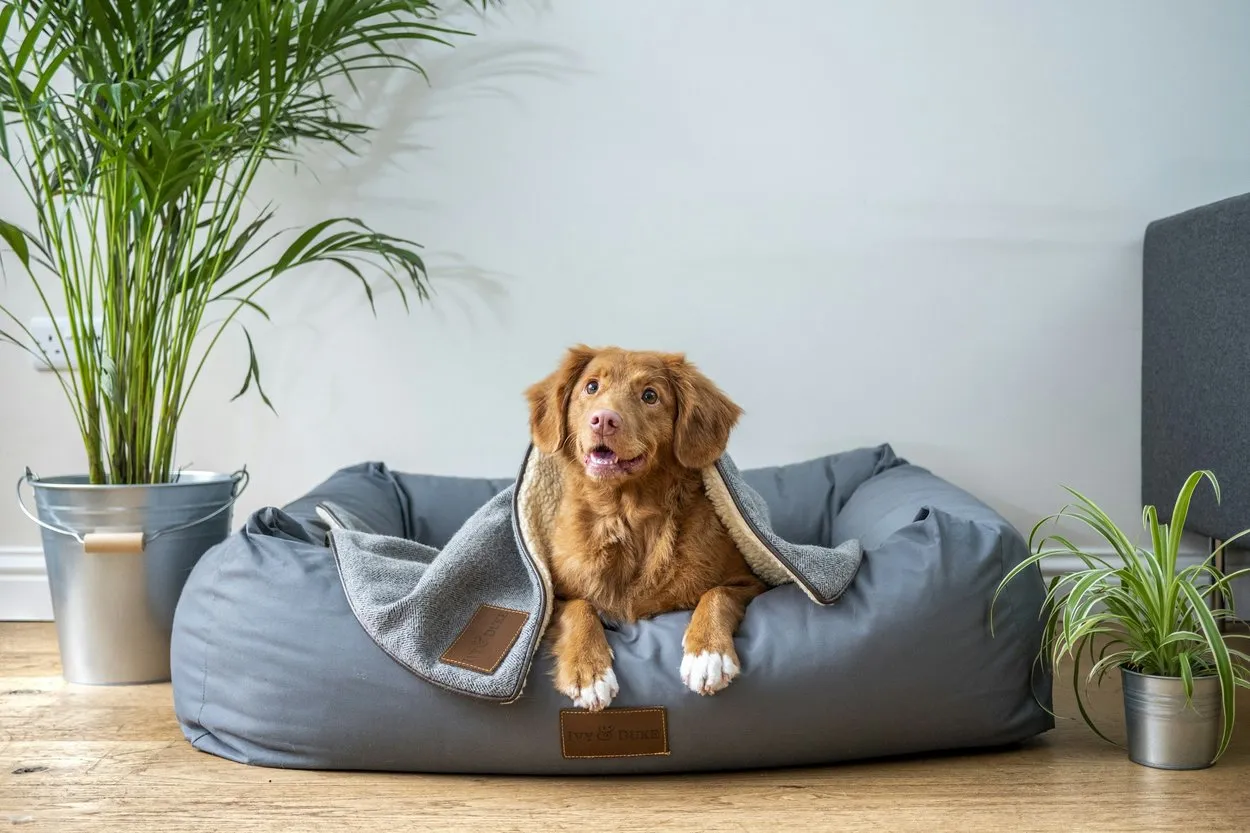
At the Holbrooke Hotel in Grass Valley, California, the rule is printed on its pet page: "Dogs must never be left unattended in the room at any time, whether or not the dog is in a kennel crate." At Four Seasons Hotel Hampshire in England, the pet page says the opposite: "Pets may be left unattended in your room." Both hotels welcome dogs. If you want to go out to dinner without yours, which of the two you have booked decides your evening, and there is no brand, country or star rating that tells you in advance.
Three Rules, Hotel by Hotel
Hotels that take dogs settle the question in one of three ways. The first is the outright ban, as at the Holbrooke. A dog must be with you or with someone you have arranged, all the time, and a crate changes nothing. At a hotel like this, dinner in the restaurant means a table where dogs are allowed, a dog sitter, or room service.
The second is the crate rule. Caesars sets it for every hotel in its PetStay programme in Las Vegas: "Dogs must be in a crate/kennel when left unattended in the room." The Beekman Arms and Delamater Inn in Rhinebeck, New York, writes it the same way round: "Dogs should not be left unattended in the room at any time, without being in a crate/carrier." The dog may stay; it must be shut in.
If your dog has never slept in a crate, the first night in a strange room is a poor place to start, and our guide to crate training covers how to get there before you go. Caesars notes that kennels are available for rent at many of its properties, so ask the front desk rather than packing one for a flight.
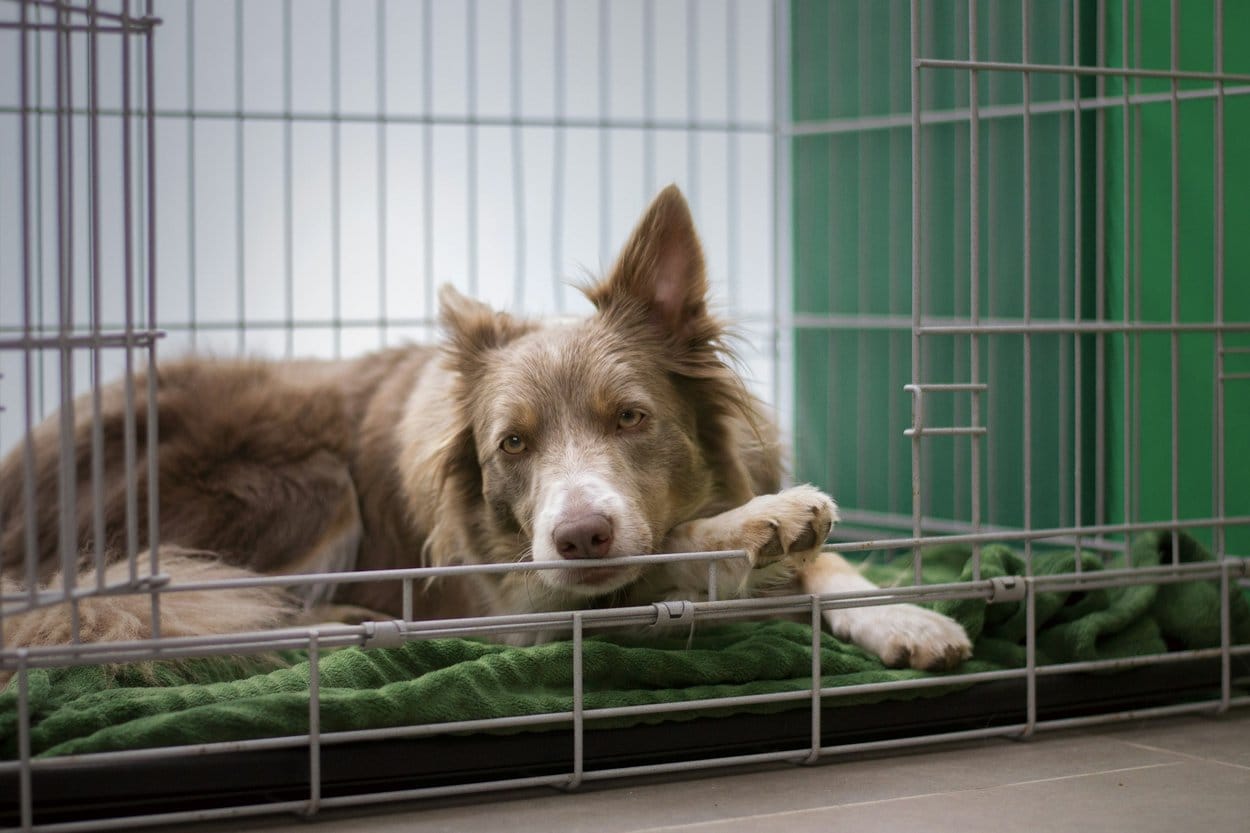
The third is permission, usually with a condition attached. Four Seasons Hampshire lets a dog stay alone but asks you to leave a mobile number with the concierge team, and offers to time housekeeping around the dog. Watergate Bay on the north Cornish coast goes a step further: if you are worried about how your dog will behave while you are away from the room, the front desk will tell you about its monitoring system.
How Often Hotels Say Yes
Every hotel we assess is asked whether a dog may be left alone in the room. Across the hotels we have ranked, 61% said yes. The figure is highest at the top and lowest at the bottom: 80% of A+ hotels allow it, against 39% of those graded F. The hotels best at welcoming dogs are the most likely to trust you and yours with an evening apart, though it is never a certainty at any grade. Fewer than one hotel in five can arrange a dog sitter, at 18%, so a ban usually means making your own plans.
Housekeeping and the Do Not Disturb Sign
The rule on leaving a dog brings a second rule with it, about cleaning the room. The Beekman Arms requires daily housekeeping and says the dog must be in a crate or out of the room while it happens, and then goes further: "Guests may not request a 'Do Not Disturb' status if they have a dog." It offers to agree a time for cleaning instead, and says the job takes about an hour. Caesars asks for the dog to be kennelled or out of the room during housekeeping too, lets you schedule it, and insists the room is serviced at least every other day.
Four Seasons Hampshire comes at it from the dog's side, offering to arrange times "so as not to disturb your pet nor enter without an owner present." Whatever the hotel, settle the cleaning time at check in. A housekeeper opening the door on a dog nobody mentioned is how dogs get out of rooms, and the Beekman Arms states plainly that it is not responsible for a dog that escapes when staff come in.
Noise, and Who Pays for It
Every policy that allows a dog to stay alone also says what happens if it barks. Caesars warns that dogs which are excessively loud "will need to be removed and boarded off property at the owner's expense." At the Beekman Arms you get a chance to deal with a noise complaint first, but a guest who cannot may be asked to leave without a refund and charged for anything the hotel gives a disturbed neighbour. At Watergate Bay, complaints about noisy dogs "should be managed by the dog owner." A dog that howls for an hour while you eat is not a private matter in a hotel corridor, and the bill for it can be larger than dinner.
What to Ask Before You Book
Ask the hotel four things, and get the answers in writing. May the dog be left alone in the room, and for how long? Must it be crated, and can the hotel lend or rent a crate? How does housekeeping work with a dog in the room, and is Do Not Disturb allowed? And if the answer to the first question is no, can the hotel arrange a dog sitter, or is there a restaurant on site where the dog may join you?
A hotel's own pet page often answers all four, as the Beekman Arms and Four Seasons Hampshire pages do. When it does, read it again the week you travel, because these rules change. When you do leave the dog, give the front desk your mobile number even if the hotel does not ask, leave the Do Not Disturb sign off the door if the rules say so, and tell the desk roughly when you will be back.
The Dog's Side of It
A hotel room is a new place full of strange sounds, footsteps in the corridor and doors closing at odd hours, and a dog that is relaxed alone at home may not be relaxed here. The RSPCA advises leaving an adult dog for no longer than four hours, and much less for a puppy.
Its advice on helping a dog settle travels well: walk the dog before you go out and come back half an hour before you leave, give a small meal shortly before, and make sure it has been to the toilet. Closing the curtains and leaving a radio on to muffle outside noise can stop a dog barking at every passer by, and a long lasting chew or a stuffed food toy gives it something to do.
Barking is not the only sign a dog is unhappy. The RSPCA's page on separation related behaviour lists trembling, panting, pacing, drooling and refusing food while you are out, and notes that half of the dogs who struggle show no obvious sign of it. It suggests filming your dog alone at home now and then.
Do it before the trip, with a phone propped on a shelf for twenty minutes while you go round the block. If the dog sleeps, book the hotel that says yes and enjoy your dinner. If it paces the door, book the restaurant that takes dogs, and our guide to training a dog to travel shows how to build up to being left, one short absence at a time.
Kali Concierge
Travelling with your dog? Ask Kali.
Where your dog is genuinely welcome to stay, eat, drink and walk in 50+ countries, how to cross borders with the right paperwork, and calm emergency medical advice with the nearest 24-hour vet. Free, day or night, in any language.