
Flying a Dog on Qantas: The Hold, the Crate and the 35°C Rule
Qantas flies pet dogs only in the hold, booked through Qantas Freight before you book your own seat and on domestic flights numbered QF400 and above. The crate, the weather rule, the flat-faced breeds, the freight terminal and why Jetstar takes no pets at all.
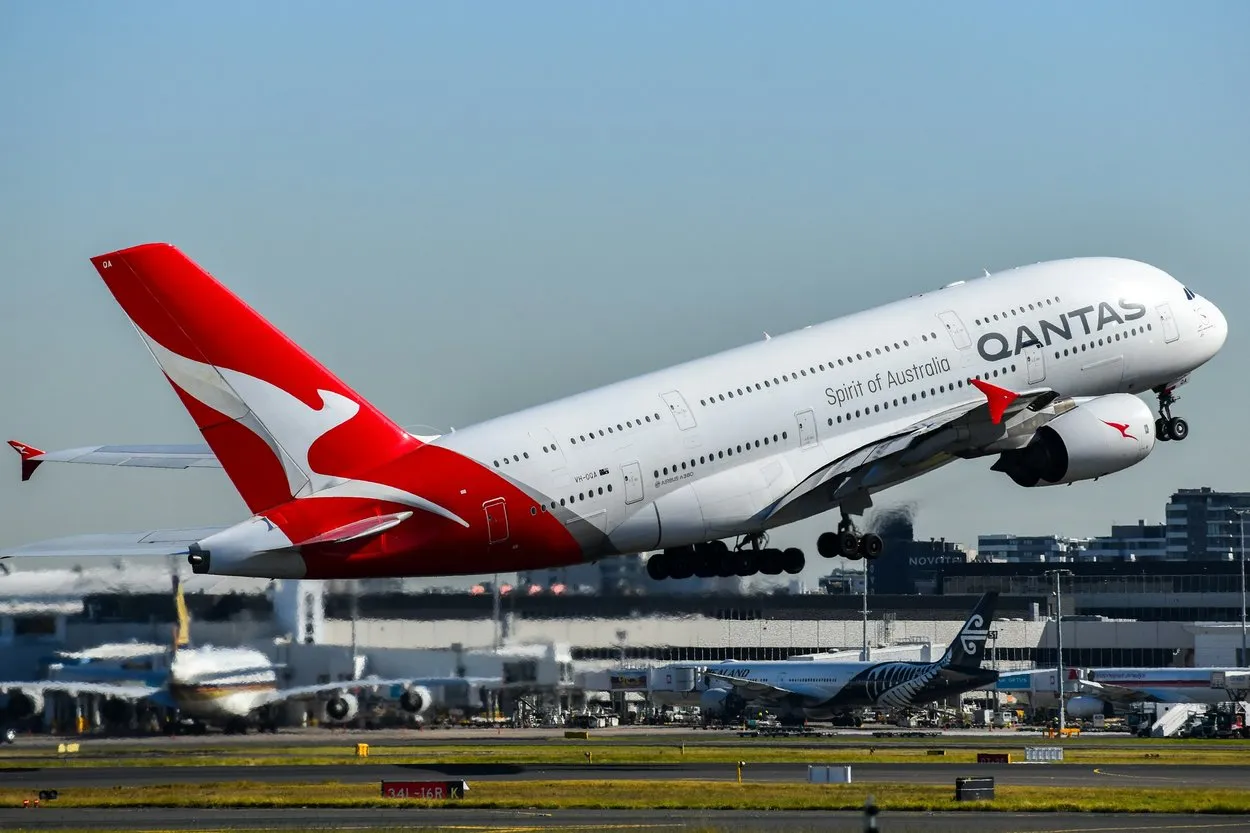
On a Qantas domestic flight your dog checks in at a different building. You drive it to the Qantas Freight terminal, not the passenger terminal, and lodge it there in its crate between 90 and 120 minutes before departure, or 65 to 90 minutes at a regional airport. From there it rides to the aircraft in an uncovered vehicle and flies in the hold, in an area Qantas says is close to the cabin in temperature and noise. Qantas carries no pet in the cabin. Pet dogs fly only as freight, booked through Qantas Freight rather than with your ticket, and within Australia only on Qantas's own flights, never Jetstar's.
Book the Dog Before Yourself
Qantas asks you to book your dog's flight first and your own second, because not every aircraft can take a pet. The Qantas Freight FAQs say only selected domestic flights numbered QF400 and above are open to pets, each flight has a limited allocation, and Jetstar takes none. Dogs are booked online under Q-GO Pets, up to 100 days ahead. Qantas will try to put the dog on your flight but does not promise it.
Changes are free online up to 24 hours before departure. Between 24 hours and 90 minutes you call Qantas Freight on 13 12 13, and any change inside 90 minutes is charged the full rate. There is no published fare: the price is worked out from the dog's weight and the size of its crate, like any other freight. The booking earns no Qantas Points, and Qantas Freight does not insure the dog, so cover has to come from your own insurer.
The Crate
You supply an IATA-approved crate, big enough for the dog to stand, sit and turn round. If you have none, Qantas sells its own, made in Australia, from its terminals in the major cities; the pet crates page lists them from the PP-20, for a dog of up to 7 kg at AU$65, to the PP-70, for up to 42 kg at AU$385. Qantas suggests collecting a new crate at least 24 hours before the flight so the dog can get used to it at home. If dog and crate together weigh over 50 kg, call first, because the crate must fit the aircraft; the smaller Fokker 100 takes nothing bigger than a PP-50.
Inside the crate goes an absorbent mat or puppy pad, never straw, litter or newspaper, and one small soft toy if you like. A water bowl that fills through a funnel from the outside is compulsory, and food is not allowed in the crate. The dog's name and the contact details of whoever sends and collects it go on the outside. Two dogs may share a crate only if each weighs 14 kg or less and they are used to living together, according to the domestic checklist.
The 35°C Rule
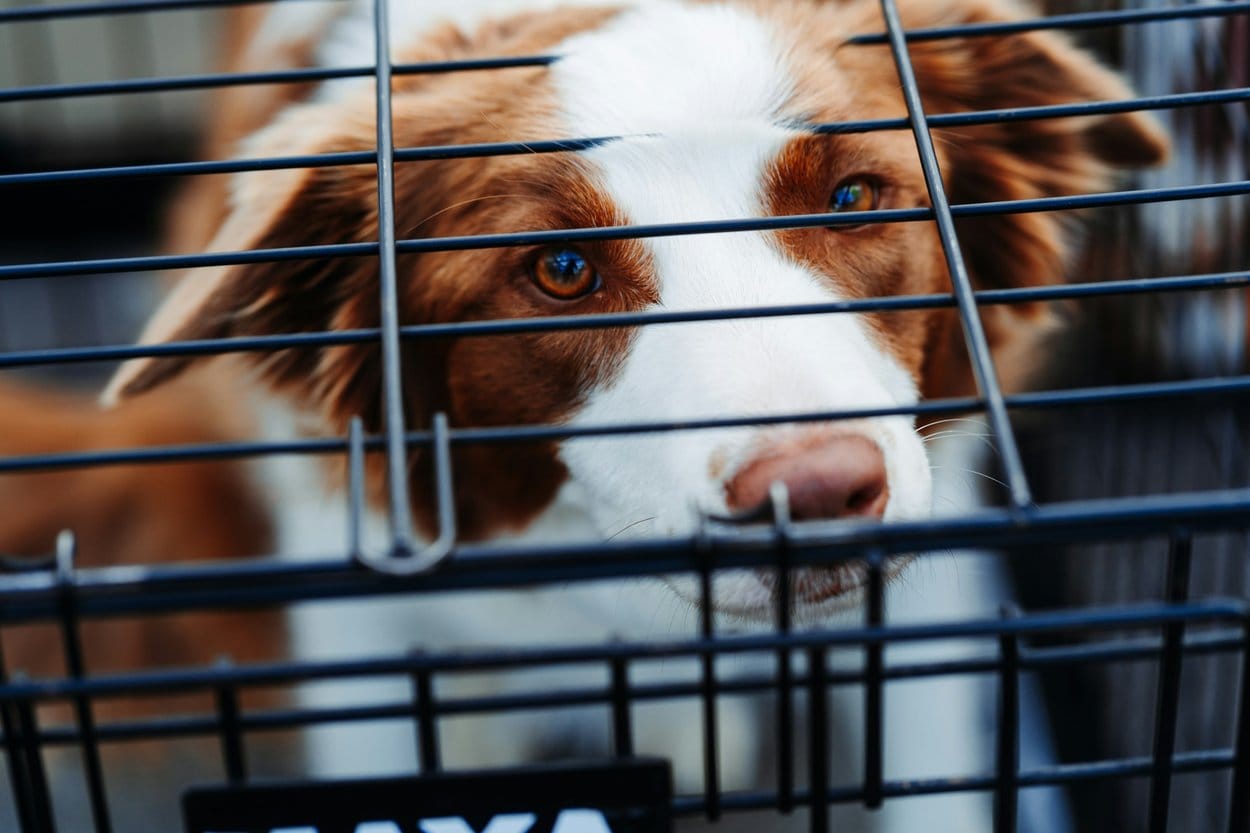
The tarmac has no roof, and Australian weather decides a good many pet flights. Under its extreme weather policy, Qantas Freight carries no animal when the forecast is above 35°C or below 5°C, or when severe wind or rain is expected, and the temperature has to sit inside those limits at both departure and arrival. A dog caught by the rule is rebooked free, sometimes onto an early morning or evening flight in summer, or a midday one in winter, and the switch can come on the day itself.
Do not sedate the dog. Staff check every pet's fitness on arrival at the terminal, and a sleepy, sedated dog can look ill, and an ill dog is not flown. Leave the coat at home too: the hold is kept between 18 and 22°C, with the lights off so the animals rest, and a blanket only makes a dog hot and thirsty.
Age, Breed and the Short Noses
A dog must be at least 12 weeks old, and a dog over 12 years needs a vet's certificate that it is fit to fly. Flat-faced breeds cannot be booked by the owner at all. The brachycephalic breeds list, which covers purebreds only, runs from the Affenpinscher and Boston Terrier through the Boxer, Chow Chow, French Bulldog, Lhasa Apso, Pekingese, Pug and Shih Tzu to the Dogue de Bordeaux and the English and Neapolitan Mastiffs. Those dogs go through a Qantas-approved pet travel specialist, whose vet checks the dog for breathing trouble before it flies, and Qantas recommends a crate at least 10 per cent larger than standard.
Some dogs cannot fly at all. Qantas Freight carries no active racing greyhounds, and retired ones go only through specialists on selected routes. The Pit Bull, Dogo Argentino, Japanese Tosa, Brazilian Fila and Presa Canario cannot be imported into Australia under federal law, and an American Staffordshire Terrier, pure or cross, must travel in a reinforced CR-82 cage or an airline-approved guard dog cage.
At the Freight Terminal
Before you leave home, give the dog water, a light snack, some gentle exercise and a toilet stop. Bring your booking details, a completed shipper statement and indemnity form, and your own ID. The dog stays in its crate from the moment you reach the terminal grounds, car park included, and children under 17 wait in the car with an adult. The terminals are not air conditioned and can be loud.
Dogs are usually ready about 60 minutes after landing, longer in Brisbane, and 10 to 30 minutes after the flight has left at a regional airport. Collect within three hours, or Qantas may call in a pet care company at your expense. If the dog has to change planes, Qantas needs 120 minutes between flights in Brisbane, Melbourne, Perth and Sydney and 90 minutes elsewhere. A delay of over five hours brings an animal care company to give the dog time out of its crate. A cancelled flight means the next one that day, or a call to collect the dog, because the terminals cannot keep animals overnight.
Service Dogs, Jetstar and Abroad
The one dog that flies in a Qantas cabin is an accredited guide, hearing or assistance dog. Under its service dog criteria it must be trained through a recognised body, hold a current Public Access Test, weigh no more than 45 kg and be approved on an application sent at least 14 days before travel. It lies on the floor beside your seat, on a mat Qantas provides. Jetstar, the Qantas group's low cost airline, says it is not equipped to carry pets and sends owners to Qantas Freight.
For an international flight Qantas strongly recommends a pet travel specialist, and a dog flying into Australia meets the federal import rules set out in our guide to the quarantine countries. Within Australia, an owner whose dog weighs 8 kg or less with its carrier now has another choice, a seat in the cabin on Virgin Australia. For any bigger dog on Qantas, the journey still begins at the freight counter, with a water bowl clipped to the crate door and a forecast under 35 degrees.
Kali Concierge
Travelling with your dog? Ask Kali.
Where your dog is genuinely welcome to stay, eat, drink and walk in 50+ countries, how to cross borders with the right paperwork, and calm emergency medical advice with the nearest 24-hour vet. Free, day or night, in any language.