
Why Are Dogs Banned From Restaurants? One Sentence From 1962
Most restaurants that turn a dog away believe there is a health reason. A new paper traced the rule back to 1940 and found one sentence, written in 1962, with no study behind it. What the evidence says, for dog owners and for anyone who runs a dining room.
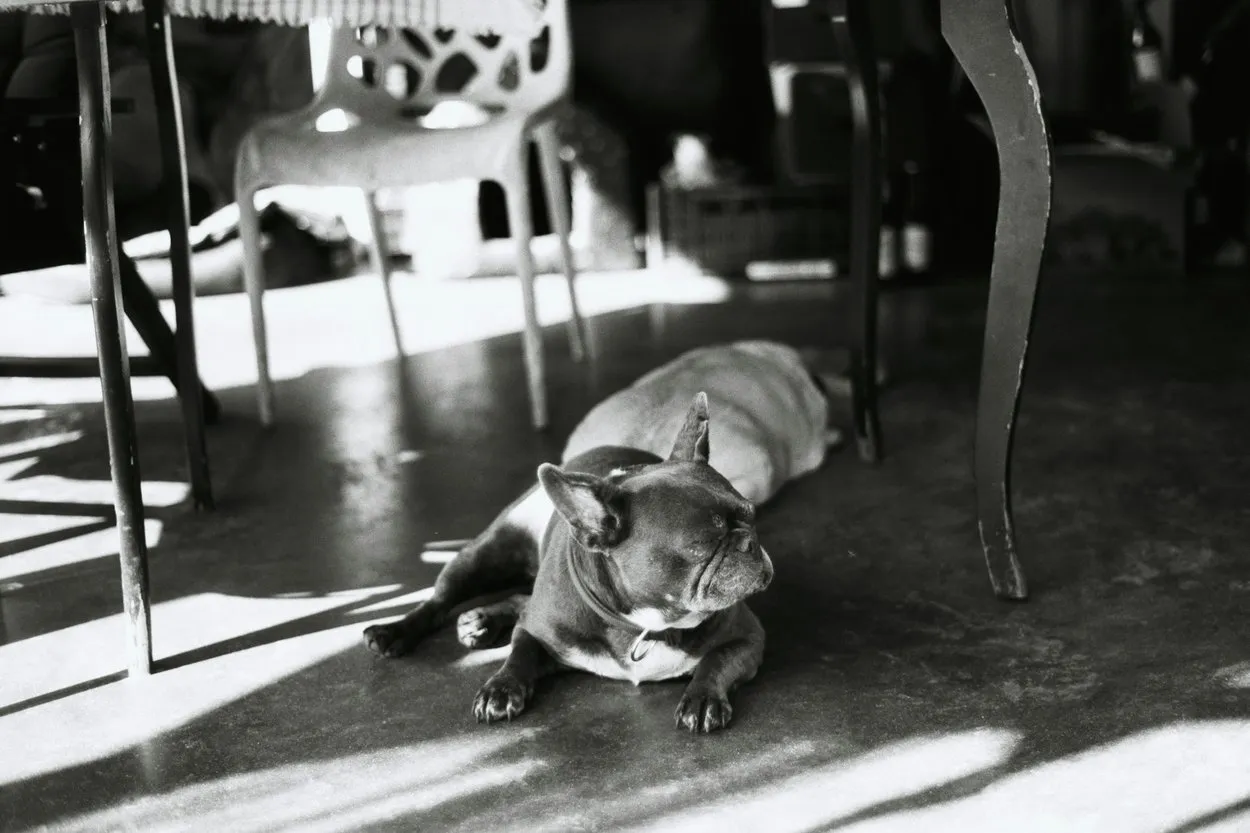
Ask a restaurant owner in Toronto or Chicago why your dog cannot come inside and the answer will be the health code. Ask the landlord of a Yorkshire pub the same question and he will wonder why you are asking, because his dining room has had dogs in it for as long as it has had customers. Both are serving cooked food to people at tables, and only one of them has been told the dog is a danger to it.
A new paper from Roch Dog, which publishes this magazine, went looking for the evidence behind the ban. No Dogs Allowed reads the food codes back to 1940, the outbreak records and the studies on dogs and hygiene, and it is about the dining room, not the kitchen. Nobody asks to bring a dog into a kitchen. The question is whether a dog lying under a table is a risk to the meal on top of it.
A Kitchen Rule That Grew
The American rule began sensibly. The model restaurant code published by the United States Public Health Service in 1940, and again in 1943, said that no animals "shall be kept or allowed in any room in which food or drink is prepared or stored". That is the kitchen and the storeroom, and for a quarter of a century the rule went no further.
In 1962 a committee rewrote it. The new Food Service Sanitation Manual barred animals from any area used for "the storage, preparation, or serving of food", and the word serving carried the rule into the dining room. The reason given was one sentence, filed under housekeeping after a paragraph on dust and another on soiled linen: "Live birds and animals may spread disease organisms, dust, and other contaminants." It cited no study and no outbreak, and every American food code since has descended from it.
Britain Never Banned the Dog
Other countries never took that step. European hygiene law keeps domestic animals out of "places where food is prepared, handled or stored" and says nothing about where customers eat, and Britain kept the same rule after leaving the European Union. A dog in a British pub or a French bistro has never been against the law. Whether it comes in is for the owner of the business to decide.
The countries that did ban dogs have spent twenty years changing their minds. Florida let its towns open restaurant patios to dogs in 2006, Australia opened outdoor dining areas nationally in 2012, and the American model code followed in 2022. In 2026 South Korea and Hong Kong, two of the strictest food regimes in Asia, began letting dogs sit indoors.
What the Outbreak Records Show
The United States investigates restaurant food poisoning more closely than any other country and publishes what it finds. The most detailed report from the Centers for Disease Control and Prevention covers 800 outbreaks between 2017 and 2019, and a second covers 2,677 more. Neither names a dog, a pet or a customer's animal as a cause. The paper found no such outbreak in the medical literature from Europe either, where dogs have sat in cafes and pubs for generations.
What the reports do name is people. Where investigators could work out what had gone wrong, a sick or infectious food worker was involved in 41% of outbreaks. When researchers watched 321 food workers on shift, hands were washed properly on 27% of the occasions the code required it. The health code that will not let a dog lie on the dining room floor is followed about a quarter of the time on the practice that matters most.
Only one food regulator has formally tested the rule. Asked by a state health department whether the restrictions were based on risk, Food Standards Australia New Zealand assessed the evidence in 2012 and judged the chance of a diner catching a disease from a dog in an outdoor dining area "very low to negligible". Its reasoning was that the dog never touches the food, and the only path between them is a member of staff's hand, which ordinary hygiene already covers. Researchers at Utrecht University later tested the paws of 50 dogs and the shoes of their owners after a walk, and found the bacteria that signal faecal contamination on fewer paws than soles.
What a Dog Does Carry
A dog is not sterile. Healthy dogs can carry germs that make people ill, usually at low levels, and dogs fed raw meat carry far more: a Swedish study found a drug resistant E. coli in 13 of 25 raw fed dogs and in one of 25 fed dry food. The weak point is the bowl. When researchers at the University of Guelph contaminated dog bowls with Salmonella in raw meat, the bacteria survived a hot dishwasher cycle in two bowls out of three. Nobody can tell by looking what a dog had for breakfast, so the sensible rules apply to every dog, and a dog's bowl is never a plate from the dining room.
If You Run a Restaurant, Bar or Pub
Start by finding out exactly what your own law forbids, because it is often less than your staff have been told. In Britain and most of Europe the legal duty is to keep the dog out of the kitchen and the food stores, and the dining room is your decision. In the United States, Canada and Australia a dog is generally lawful outdoors only, often with local approval, and assistance dogs must be admitted almost everywhere.
Where the choice is yours, the governments that have opened their dining rooms all arrived at the same short list. The dog stays on the floor on a short lead, out of the aisle. Whatever it eats or drinks from is its own bowl, washed apart from the tableware, and staff who stroke a dog wash their hands before they touch anything else. A sign on the door and the booking page tells a guest with an allergy or a fear of dogs what to expect, and part of the room is kept free of dogs. Any dog that barks, lunges or will not settle is asked to leave, whatever its size, and any food served to a dog is cooked.
If You Are the One With the Dog
The same list works from the other side of the table. Ask for a table at the edge of the room, away from the kitchen door and the main walkway, keep the lead short and the dog on the floor, and carry a bowl of your own in case the restaurant has none. Never let a dog eat from your plate or drink from your glass, the one point on which every hygiene rule in every country agrees. A dog that pants, paces or hides under the chair is telling you it would sooner be somewhere else, and it is kinder to take the hint.
It also helps to know which kind of country you are in. Across Britain and most of Europe the decision belongs to the restaurant, so a polite question at the door is all it takes, and our guide to eating out with your dog around the world sets out the rules country by country. In much of North America the answer indoors is still no by law, however much the owner might like to say yes, so look for the patio.
Sixty Years Under the Table
One group of dogs has been eating out legally all along. The 1962 code that closed American dining rooms to animals opened them, in the same sentence, to guide dogs, and assistance dogs of many kinds have sat in restaurants, cafes and hotel dining rooms every day since. Training does not change what a dog carries on its coat or its paws, and the paper found no outbreak attributed to one. The law has always accepted that a dog can lie under a table safely. It has only been particular about which dog.
Kali Concierge
Travelling with your dog? Ask Kali.
Where your dog is genuinely welcome to stay, eat, drink and walk in 50+ countries, how to cross borders with the right paperwork, and calm emergency medical advice with the nearest 24-hour vet. Free, day or night, in any language.