
Balto Got the Statue, Togo Ran the Miles
In 1925 twenty mushers and more than 150 sled dogs carried diphtheria antitoxin 674 miles across Alaska to Nome. Balto ran the last leg and became famous; Togo led the longest and was nearly forgotten. Here is the run, and the four places you can still stand beside both dogs.
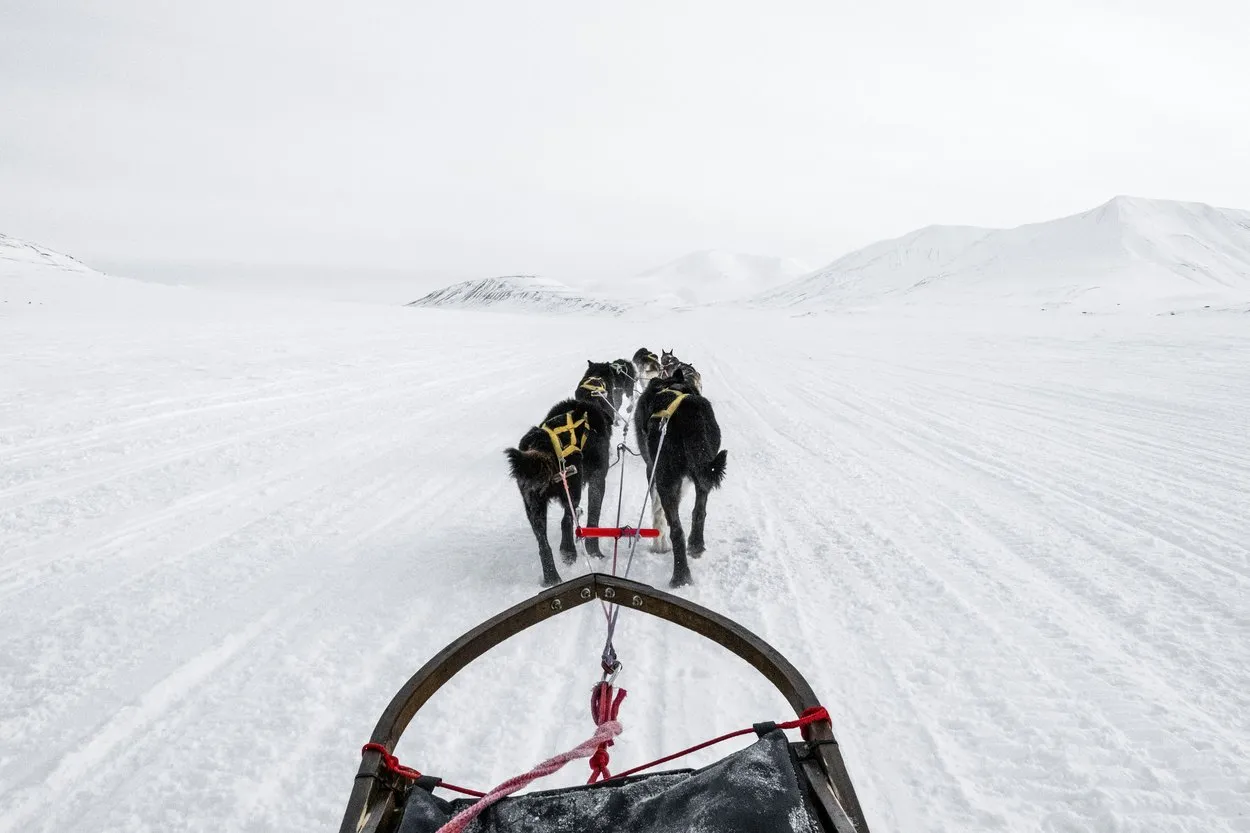
Somewhere on the last leg to Nome, at the start of February 1925, a sled dog called Balto stopped dead on the Topkok River. His paws had gone through the ice. By stopping he very likely kept Gunnar Kaasen's team out of the water, and early on 2 February that team ran into Nome carrying the serum the town was waiting for. "Damn fine dog," Kaasen said of him afterwards. Within the year Balto had a bronze statue in Central Park. The dog who had done the hardest work of the run got no statue at all, and New York did not give him one until 2001.
A Relay Across Alaska
The emergency was diphtheria, and Nome had run out of antitoxin. In late January 1925 the town was icebound and more than 650 miles from the nearest railroad, at Nenana. Its doctor asked for a million units of antitoxin; about 300,000 could be found, in Anchorage. The serum reached the railhead at Nenana on 27 January, and from there it went on by dog, as the Cleveland Museum of Natural History sets out in its centenary account.
It went as a relay. Twenty mushers and more than 150 dogs passed the serum from team to team across roughly 674 miles, most teams carrying it about 30 miles at six to nine miles an hour, in temperatures between minus 30 and minus 60 Fahrenheit. The first musher, "Wild Bill" Shannon, came off his 52 miles with hypothermia and frostbite. The journey usually took a month. The relay did it in 127 hours, about five and a half days.
The Longest Leg
Leonhard Seppala was a Norwegian who bred and raced Siberian huskies, smaller and leaner than the freight dogs of the day, and his lead dog was Togo. Born on 17 October 1913, Togo had a painful throat complaint as a puppy and Seppala gave him away; Togo escaped his new home through a window and came back to the teams, and Seppala moved him up the line until he shared the lead, as the National Park Service tells it.
Seppala had already driven about 150 miles out from Nome to meet the relay when he took the serum, and his leg back, 91 miles, was the longest of the run. He crossed Norton Sound on the sea ice to save time, ice that could break up without warning, and it did, three hours after Togo had brought the team across. The Park Service puts the miles Togo led on the serum run at 261 and calls his leg the most dangerous; by the Iditarod's count, most teams ran between 25 and 40. Togo was eleven.
The Dog at the Finish
Balto was one of Seppala's dogs too, a backup the musher thought better suited to hauling freight than to racing. He ended up leading Kaasen's team on the final leg, 53 miles in about minus 50 by the museum's figure, through whiteout and snow blindness that left Kaasen relying on his dog to find the trail. They took the serum on 1 February and were in Nome early the next morning, and it was the dog who brought it in that the country remembered.
What came after was not kind to him: two years touring vaudeville with Kaasen, then Balto and his teammates were sold and put on show in a dime museum in Los Angeles. A Cleveland businessman, George Kimble, found them there and agreed to buy Balto and six surviving teammates for $1,500. He had two weeks to raise it. The city's Balto Fund did it in about ten days, much of it in pennies. The dogs arrived in Cleveland on 19 March 1927 to a parade through Public Square and lived out their days at the Brookside Zoo, now the Cleveland Metroparks Zoo. Balto died in 1933.
Togo retired with Seppala to Poland Spring, Maine, where he was put to sleep on 5 December 1929 at about sixteen. His mounted skin went first to the Shelburne Museum in Vermont; his skeleton is at Yale's Peabody Museum of Natural History.
Balto in Central Park
The statue went up fast. Frederick Roth's bronze Balto was unveiled on 17 December 1925, ten months after the run, and Balto himself was in New York for it. He stands on a rocky outcrop just east of Willowdale Arch, near East 67th Street, and the Central Park Conservancy calls him a destination for children who like to climb.
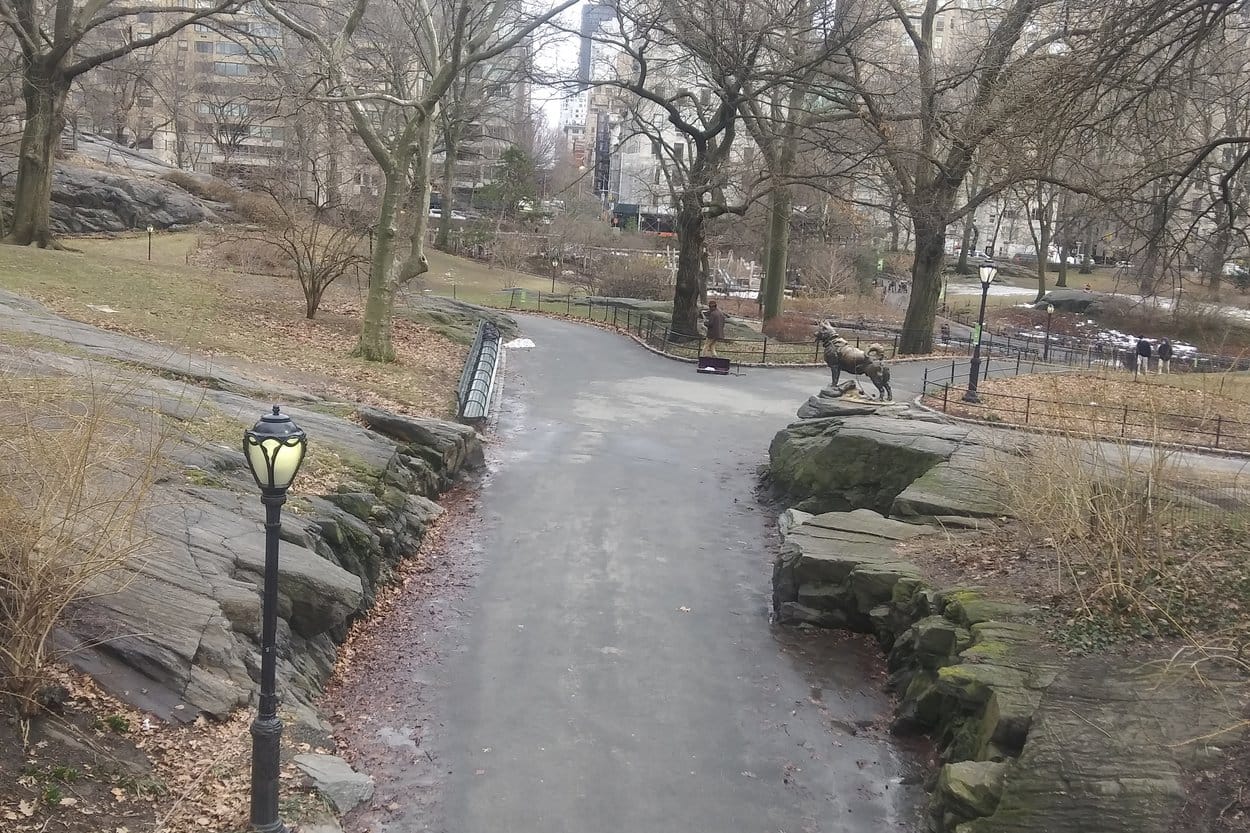

It is also one of the better places in New York to bring your own dog. Under the Conservancy's rules for dogs, dogs must be on a lead from 9am to 9pm, and in the hours either side, 6am to 9am and 9pm to 1am, they may run off the lead in the areas set aside for it. An early morning walk past Balto, before the lead goes back on, is about as fitting a visit as there is.
Balto in Cleveland
Balto himself is in Cleveland. After his death he was mounted, and he stands today in the Visitor Hall of the Cleveland Museum of Natural History at 1 Wade Oval Drive, open 10am to 5pm Tuesday to Sunday. He has kept working: in 2023 his DNA went into a study in the journal Science comparing the genomes of 240 mammals. Outside, by the Wade Oval entrance and next to the museum's stegosaurus, stands a second bronze Balto, and that one your dog can sit beside.
Togo on the Lower East Side
Togo's statue is downtown, in Seward Park, a park named for William Henry Seward, the statesman who arranged the purchase of Alaska in 1867. It opened on 17 October 1903 as the first permanent, municipally built playground in the nation. When the park was renovated in 2001 its designers nodded to Seward's purchase with a seal spray shower, a Mount McKinley play unit and a bronze of the husky Togo by Shelley Smith Curtiss. After seventy-six years, Balto had company.
For years the statue had no proper plaque. NYC Parks and the Seward Park Conservancy fixed that in July 2020, and when the park was renovated again Togo was given his own circle in the garden. The plaque says he led his team "in blizzard conditions" and "traveled nearly 300 miles, farther than any other dog in the relay."
Togo in Wasilla
Togo's mount left Vermont for Alaska and is now on display at Iditarod Headquarters in Wasilla, at 2100 South Knik-Goose Bay Road. The visitor centre is open every day from mid-May to mid-September, 9am to 5pm, and on Wednesdays only from October to December. A second Balto statue stands there too, shipped up in 2009.
One thing to know before you go. The Iditarod race, which we wrote about when it leaves Anchorage each March, is often described as a re-run of the serum relay. It is not. The race's own page, Balto Lives WHERE?, says it "was never meant to commemorate the Serum Run of 1925"; Joe Redington Sr founded it to commemorate the Iditarod Historic Trail and to save the sled dogs. The run to Nome belongs to the twenty mushers and their 150 dogs.
So the two dogs who carried the serum furthest and last ended up a long way apart: Balto in Cleveland and Central Park, Togo in Wasilla and on the Lower East Side. Like Hachiko in Tokyo, they are easier to visit than most famous dogs. And there is one small fact the people who built Seward Park could not have known: the playground opened on 17 October 1903, and Togo was born ten years later to the day.
Kali Concierge
Travelling with your dog? Ask Kali.
Where your dog is genuinely welcome to stay, eat, drink and walk in 50+ countries, how to cross borders with the right paperwork, and calm emergency medical advice with the nearest 24-hour vet. Free, day or night, in any language.