
Following Hachiko: The Akita, the Professor and the Places You Can Still Visit
The films say Hachiko walked his master to Shibuya Station every morning. The University of Tokyo says he did not. The true story of Japan's most famous dog, and the trail from Shibuya to Ueno and Odate.
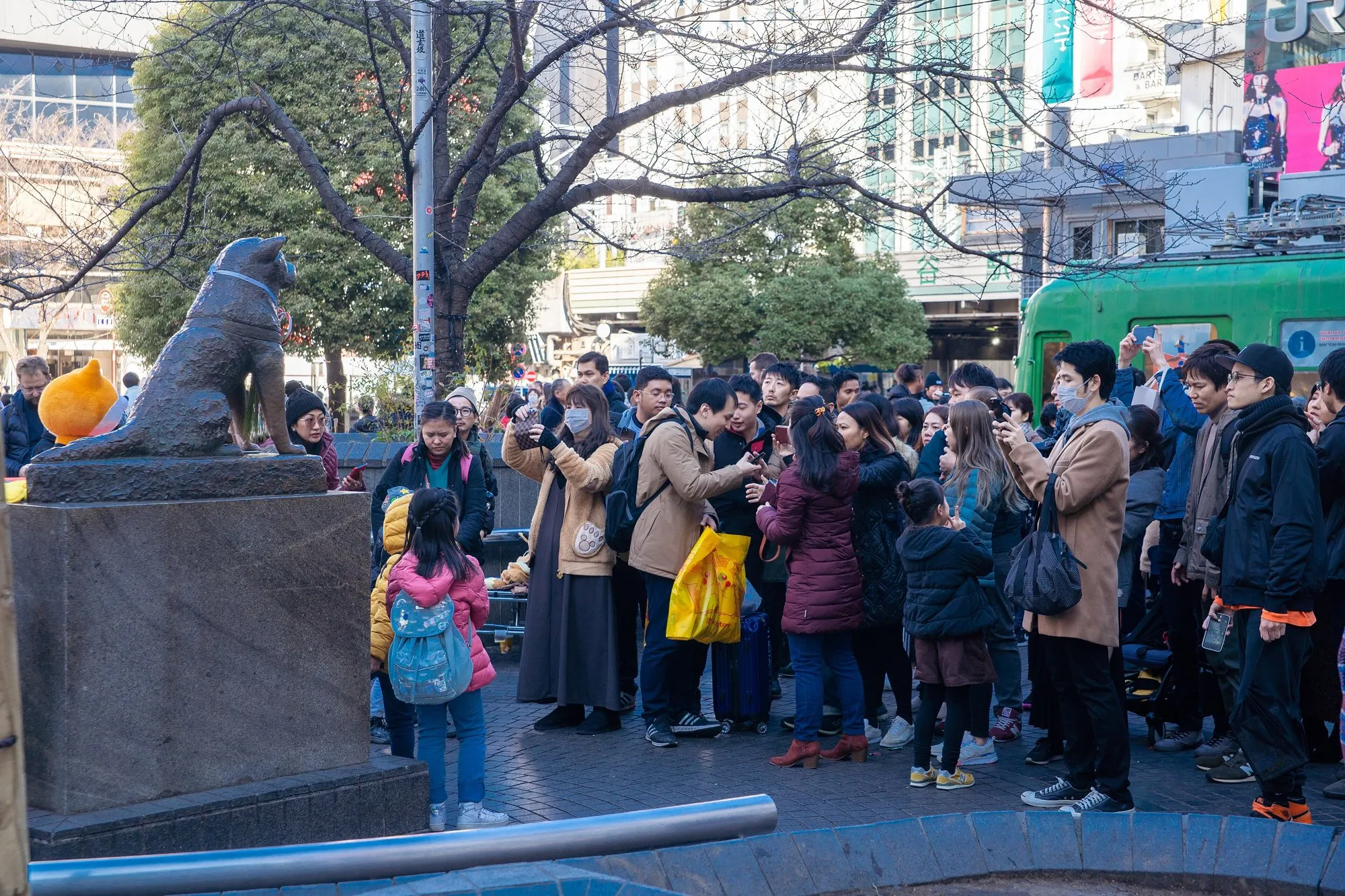
On 22 November 1934 Japan's ordinary elementary schools were given a moral education textbook with a lesson called "Never forget to show your gratitude". It told every child in the country that a dog had walked his master to the station every morning to see him off, and returned in the evening to meet him. That dog was Hachiko, and the scene has been retold ever since, in the 1987 film Hachiko Monogatari and in its 2009 remake, Hachi: A Dog's Tale. According to the University of Tokyo, where his owner taught, it is not a true depiction. The real story is smaller, stranger and better, and almost every place in it can still be visited.
A Year, Not a Lifetime
Hachiko was an Akita, born in 1923 in what was then the village of Niida and is now the city of Odate, in Akita Prefecture, according to Odate's own announcement of the visitor centre it built in his honour. His owner was Hidesaburo Ueno, who taught at the School of Agriculture in Tokyo, the forerunner of the University of Tokyo's Faculty of Agriculture. He was Japan's first scholar of agricultural civil engineering, and after the postwar land reform his method for laying out paddy fields became the standard for Japanese rice farming, as the university's own history of him records.
The university's associate professor Takashi Tamura has taken the film version apart. Ueno only had Hachiko for about a year, in 1924, before the Inokashira railway line had even opened. His house stood at the back of the Shoto neighbourhood, between the campus and Shibuya Station, and the Faculty of Agriculture was then at Komaba, about a ten minute walk away. Ueno walked to work. Hachiko saw him off and waited for him at the main gate of the campus, not at the station, and Hirokichi Saito recalled seeing the dog from horseback near the front gate. The station only enters the story after Ueno's death, when Saito himself wrote in the Asahi Shimbun of 4 October 1932 that the dog was waiting there for a master who would not come home. The textbook, Tamura concludes, was a conflation of the two stories.
The university carries a less heroic theory too. Professor Masaru Mizoguchi recalls a lecture in which he was told that Hachiko may have been at Shibuya Station because someone there was feeding him yakitori. Nobody can prove it either way, and it does not make the waiting any less true.
What the Autopsy Found
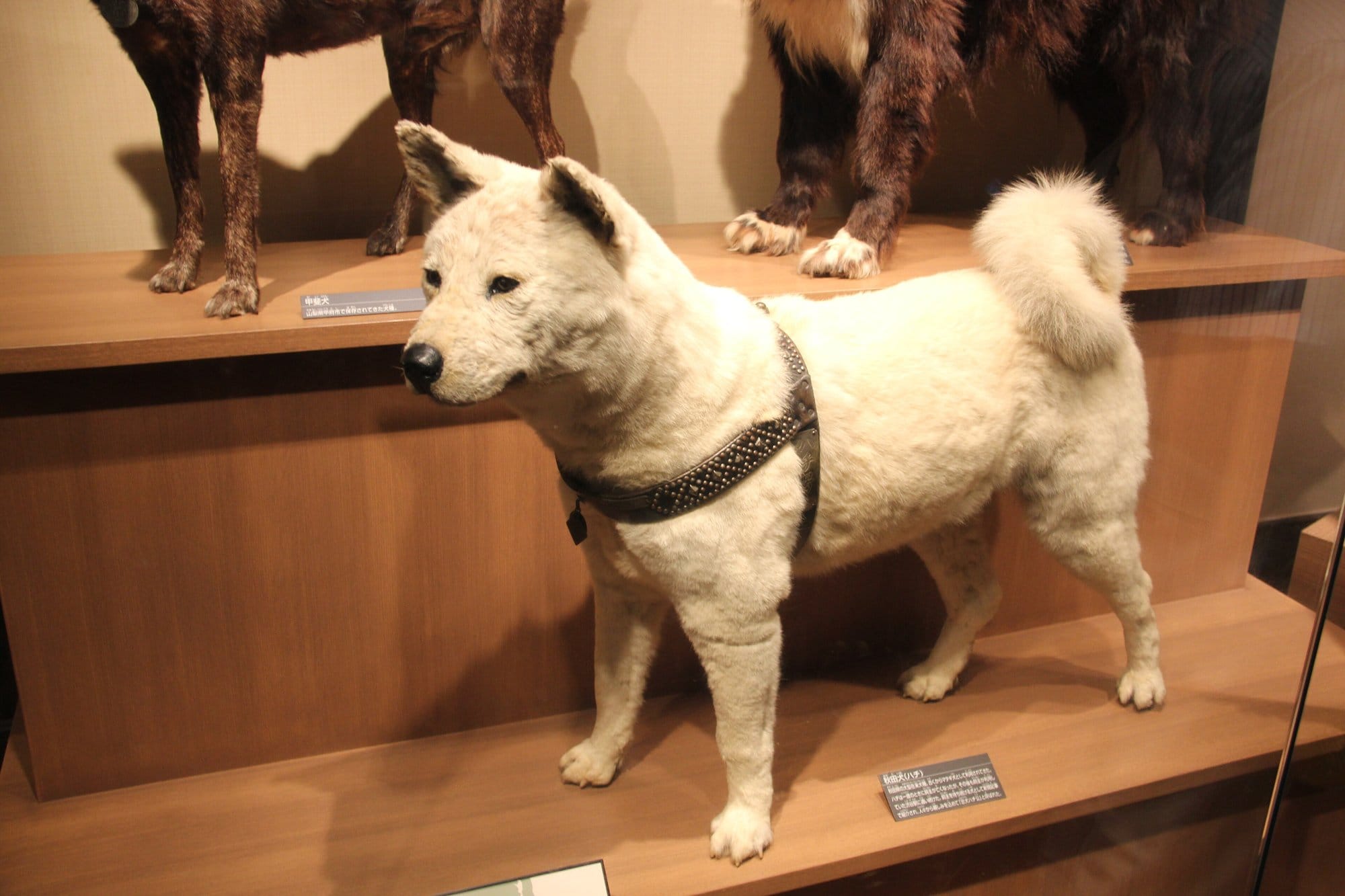
Before dawn on 8 March 1935, Hachiko was found dead on the south side of Shibuya Station. His body went to the pathology laboratory of the Faculty of Agriculture at Komaba, where an autopsy that afternoon gave the cause as dirofilariasis, heartworm, which killed many dogs at the time. His lungs, heart, oesophagus, liver and spleen were kept in formalin, and his body was mounted for the National Museum of Nature and Science.
Seventy five years later the organs were looked at again. A researcher wanted to compare Hachiko's genes with those of modern Akitas, tissue slices were cut, and Professor Kazuyuki Uchida found under the microscope that Hachiko had possibly suffered from lung carcinosarcoma that had spread to his heart, along with more than thirty heartworms. The tumours, the university notes, would have made his last years painful. The dog who waited at Shibuya was an old, sick dog, which makes the waiting harder to read about, not easier.
The Tokyo Trail
The obvious start is the bronze outside Shibuya Station. The first statue there was made in 1934 by the sculptor Teru Ando, whose work was the subject of a 2025 retrospective at Shibuya's own Shoto Museum of Art. If you want the walk Hachiko actually made, the university suggests the road from Komaba to Shibuya as the true "Hachiko's street", since the old main gate of the Faculty of Agriculture stood near the Shoto 2-chome crossing, where the Mita irrigation canal ran under a bridge.
The Faculty of Agriculture has since moved to the Yayoi campus in Bunkyo. Just inside its No-seimon gate, on the left, is the statue the university unveiled on 8 March 2015, the eightieth anniversary of the dog's death: the gleeful reunion of a young Hachiko and his master, the one the two never had at the station. Immediately to the right of the same gate is the faculty's Agricultural Museum, open from 9:00 to 17:00 every day of the year except days when entry to the university is restricted for entrance examinations. Hachiko's preserved organs are on show there beside a bust of Professor Ueno, and on the eighth day of each month, from 10:00 to 16:00, the Hachiko and Dr. Ueno Project turns the museum into a small Hachiko shop.
Across the city in Ueno Park, the National Museum of Nature and Science displays the mounted Hachiko, a cream coloured Akita in his studded leather harness. Tokyo's official guide lists the museum as open from 9:00 to 17:00, closed on Mondays, with general admission at 630 yen. The last stop in Tokyo is Aoyama Cemetery, where Ueno is buried. His partner Yaeko, his common law wife, was buried apart from him; since 2016, through the efforts of the professors who followed him, she has rested together with Ueno and Hachiko there.
Odate, Where It Began
For the dog owner, the trail ends best in the north. Odate calls itself the home of the Akita, and in 2019 the city opened Akita Inu no Sato, the Akita Dog Visitor Center, across from JR Odate Station. Its building is modelled on the Shibuya Station of the Taisho era, the one Hachiko knew, and the Hachiko statue that used to stand near Odate Station was moved to the front of it, where it looks straight at the station.
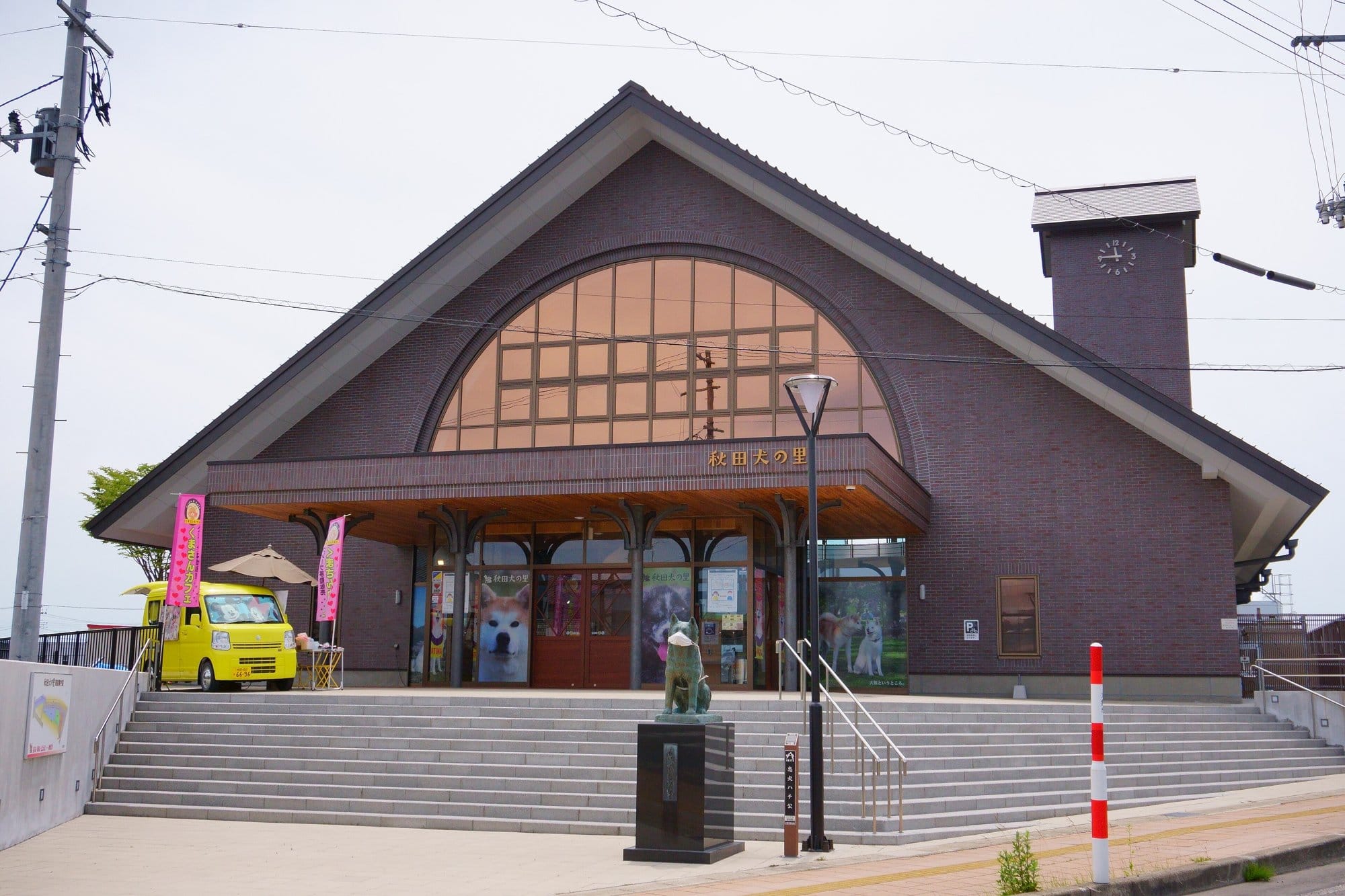
Inside are an Akita museum, a tourist information desk and a shop, and an exhibition room where a real Akita can be watched through glass from 9:30 to 16:45, with a break of around fifteen minutes now and then. The dogs take Mondays off, or the following weekday when Monday is a holiday, and nobody touches them: the centre explains that Akitas are often uneasy being handled by anyone but their owner or people they know well, and it will not wake a sleeping dog to perform. Admission is free. The best known of the resident dogs is Sora, a white male born on 4 February 2024, whose name was chosen from 654 entries and who also serves as the tourist station master of JR Odate.
The detail that matters most to anyone travelling with a dog is on the centre's facilities page. You may bring your own dog into the building, everywhere except the Akita museum, and the lawn beside it is open to visiting dogs and their owners. On 8 August this year, a date with three eights in it, the centre held a Hachiko gratitude day that included giving the statue out front a polish.
Taking Your Own Dog
The Shibuya statue is in the open air and your dog can sit in front of it like anyone else. The Tokyo museums are stops for the human half of the party, so plan them around a walk, and check with each before bringing a dog to the door. Our Tokyo City Guide has the parks, cafes and hotels for the rest of the day, and Japan Is the Most Dog Friendly Country on Earth, and Almost Nobody Knows It explains why the country is easier with a dog than its reputation suggests. Odate is a train journey north, and the one place on the trail built to say yes to the dog at your side, which seems the right way to honour a dog who spent his life waiting by a gate.

Kali Concierge
Travelling with your dog? Ask Kali.
Where your dog is genuinely welcome to stay, eat, drink and walk in 50+ countries, how to cross borders with the right paperwork, and calm emergency medical advice with the nearest 24-hour vet. Free, day or night, in any language.