
Michael Schneider on Flying Dogs Across America
Michael Schneider flies a turboprop into the places the trucks can no longer reach. When a hurricane or a wildfire tears through a region and the roads are gone, the local airport is one of the first to reopen, and that is Michael's cue. He has rescued more than seven thousand animals.
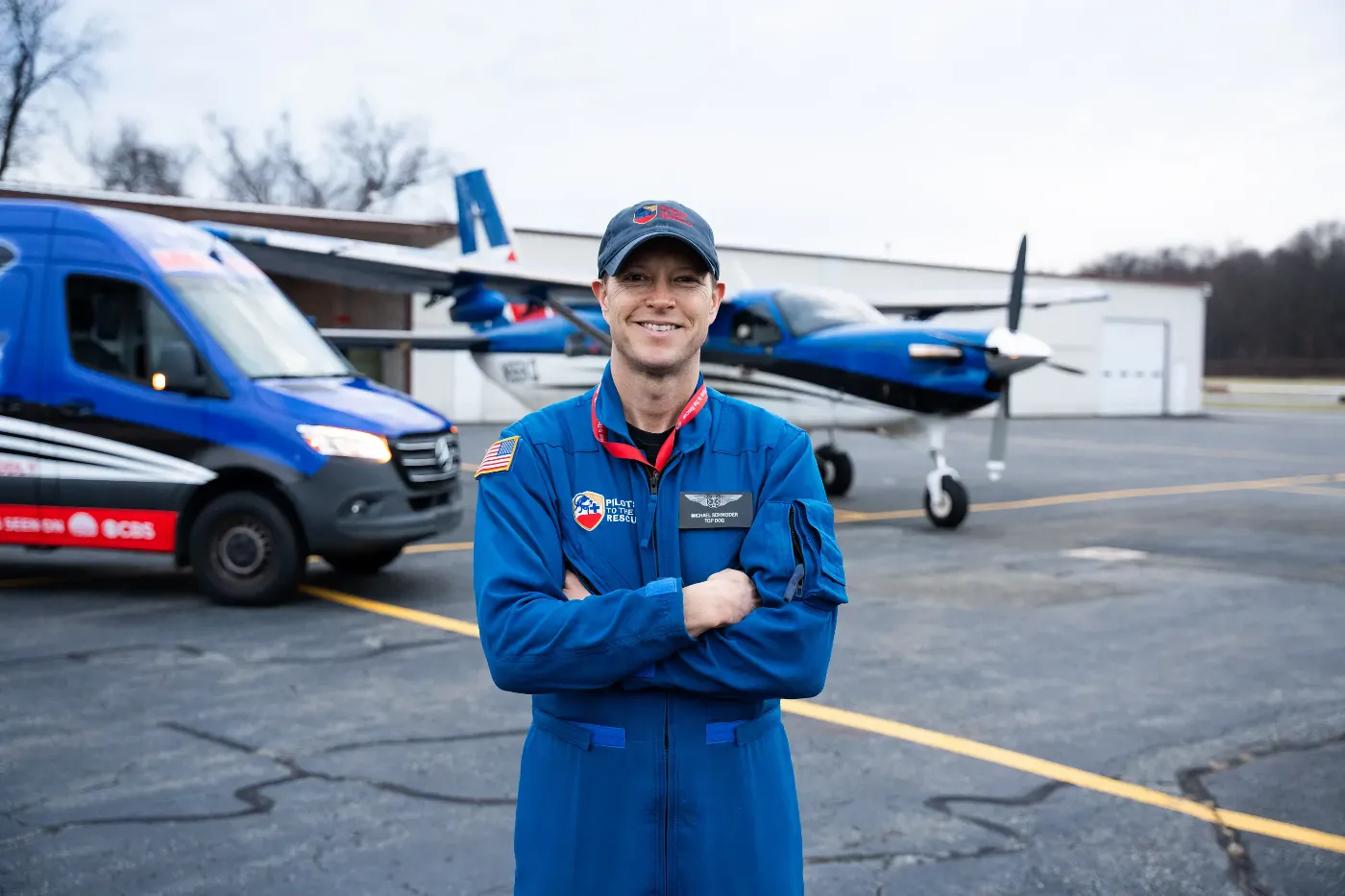
Michael Schneider flies a turboprop into the places the trucks can no longer reach. When a hurricane or a wildfire tears through a region and the roads are gone, the local airport is one of the first to reopen, and that is Michael's cue. He flies in, loads up the animals left behind, and carries them out to safety. Most of the time it is quieter work, emptying overcrowded shelters before the dogs and cats inside run out of time. In eleven years he has moved more than seven thousand animals.
Fly enough of those missions and you collect stories, and Michael has a hangar full of them. He has lost all his engine oil on the ground in Kentucky on a Sunday. He has had his radio die over New York City, in cloud, in some of the busiest airspace on the planet. He once lost an alternator in flight, had the plane grounded under him, and finished the run behind the wheel of a U-Haul truck rather than leave a single dog behind.
He tells all of it the way other men tell you about a bad round of golf. Calm, amused, a little surprised you find it interesting. He is the founder and executive director of Pilots to the Rescue, he runs seven vans and five staff alongside the planes, and in one of the most enjoyable hours I have spent on a call this year.
That is the man. Honest to a fault, generous with his time, and quietly proud of something that genuinely works. I liked him enormously. Let me tell you how he got here, because the journey is better than the destination, and the destination involves flying wolves.
The Boy Who Nursed Birds
Michael grew up adopting animals from the Westchester SPCA. Not occasionally, as a way of life. "That's all I ever knew, was adopting rescue animals," he told me, and all these years later he still drives transport runs for the same shelter that gave him his first dog.
He was the boy in the neighbourhood who nursed the injured bird back to health, the one with the fish and the hamsters and the hermit crabs. The family still tells the story of the time the hamsters escaped into the walls of the house, a crisis his father solved by walking down to the SPCA and coming home with a cat. By eleven he was running a little pet sitting business out of a neighbour's unused outdoor pen.
He has a quiet theory about what all of that does to a child. A rescue animal in the house, he reckons, "leads to more empathy and compassion, you feel like you're doing something good, subliminally."
A Recovering Serial Entrepreneur
The animals were the constant. The career was anything but. Michael cheerfully calls himself a recovering serial entrepreneur, and the businesses came one after another.
Here is the part that made me put my pen down. He was the founding publisher of a magazine called Boutique Design, and the founder of its trade show, Boutique Design New York, at the Javits Center. It is one of the biggest events in American hospitality interiors. His partners in it were the major New York hotel associations, he sat in their board meetings, and he sold the whole thing in 2008 as the crash hit.
I certify dog friendly hotels for a living. I had called to talk to a rescue pilot about his childhood hamsters, and here was a man who had spent years inside the hotel industry at board level. Neither of us saw it coming. That is a conversation for another day, and not the reason you are reading this. After Boutique Design came a corporate events business, which, in his own flat words, got decimated by COVID. By then something else had already taken hold of him.
The Birthday Skydive
It started, as these things do, with a girlfriend and a birthday present. She booked him a skydive in Cincinnati, and he came down fixated on entirely the wrong part of it. He was not thinking about the jump. He was thinking about the pilot, and the instruments, and the single set of hands flying the aircraft.
He did four jumps in all. On the third, in Miami, he asked the pilot whether he should learn to skydive properly or learn to fly. Skydiving is a lonely sport, the pilot told him, you cannot really take anyone with you, but get your licence and you can take people to lunch, fly the skyline, share it. That was the end of Michael's argument with himself. He took a discovery flight back in Cincinnati, signed up for lessons on the spot, and got the bug straight away.
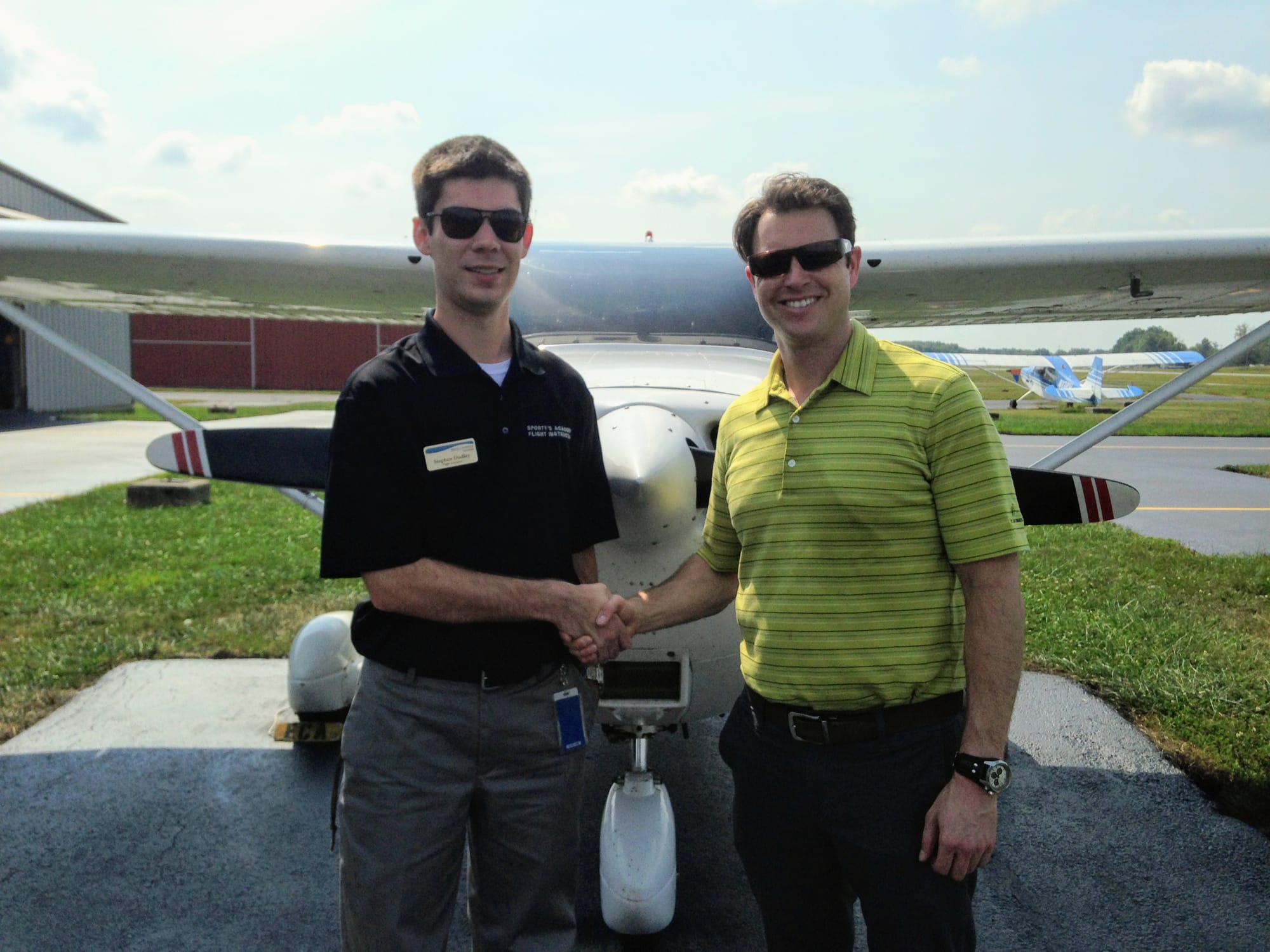
The licence took him two years rather than one, because work kept pulling him away, and every gap in a logbook means relearning what you have lost. When he moved back to New York he found out he had trained in gentle skies. "If you can fly in New York, you can fly anywhere," he said, and he means it. He flies out of Essex County Airport in New Jersey, where hangar space carries waiting lists measured in years, and he is evangelical that ordinary people can fly if they stop dreaming about owning a plane and start joining flying clubs. He wanted to fly, so he found a way. That is the pattern for everything he does.
Possengers
With a licence in his pocket, Michael started doing what pilots call public benefit flying. Pro bono medical transport, Civil Air Patrol, Coast Guard Auxiliary. Useful, worthy, and not quite it.
Then he heard that other pilots were using their own aircraft to fly animals out of kill shelters, and something clicked into place that had been waiting since he was the boy with the bird. "I heard people were using their aircraft for philanthropic reasons, I started doing some of those, and that was my calling," he said. He is honest about why it suited him. He liked the animals rather better than the people at that point, and they made for better passengers besides.
He calls them possengers. I have already stolen the word. And true to form, having found the thing he was meant to do, he did not go and volunteer for somebody else, he decided to build his own outfit and buy a bigger plane.
Twelve Thousand Dollars in Forty-Eight Hours
He went to friends and family with an idea and a fundraising page, and inside forty eight hours he had twelve thousand dollars. The first aircraft was a 1976 Piper Lance, around two hundred thousand on a loan he personally guaranteed.
When I raised an eyebrow at the age of the thing, he set me straight with the patience of a man who has explained it a hundred times. A 1976 airframe is nothing, he said, what matters is hours, and ten thousand hours on an airframe is about a hundred thousand miles on a car, with an engine overhaul every couple of thousand. He would own four of those Lances over the years. He loves them and he is clear eyed about them in the same breath, because the things spent more time on the ground than in the air, never built to be flown as hard as he flew them.
Then the pandemic arrived, and did the exact opposite to Pilots to the Rescue that it did to everyone else. His events business died. The rescue work boomed, because ground transport across New England seized up and an aircraft does not care about state lines or lockdowns, and he could fly to North Carolina, load up, and be home inside a day. Demand climbed, and so did the strain on four ageing planes, at the precise moment when getting anything fixed was a nightmare. Which is where the good stories start.
The best dog-friendly hotels are certified. Find one near you →
The Quiet Emergencies
Every pilot has a hangar full of these, and Michael tells his as comedy. Listen closely though, and they are all about the same thing, which is that he will not leave the animals.
Take the radio, which died on him mid flight over New York, the aircraft drifting in and out of cloud with the ground just visible below. Control flagged him as NORDO, no radio, in some of the busiest airspace on earth, and the instruction came back blunt. Find a hole in the sky and land. He calls it a non-event. He took the advice and put it down.
Then the alternator, which failed mid mission on a Sunday with nothing open anywhere. He made a calculated gamble, took off again on battery alone with maybe thirty minutes of power, and nursed the plane to a bigger airport, where it was promptly grounded. The only thing he could find to finish the run was a U-Haul box truck. No heating, no air conditioning, the dead of winter, some of the animals still puppies. He drove them through the night from North Carolina to Philadelphia, pulled in at three in the morning, and checked on them at every rest stop along the way.
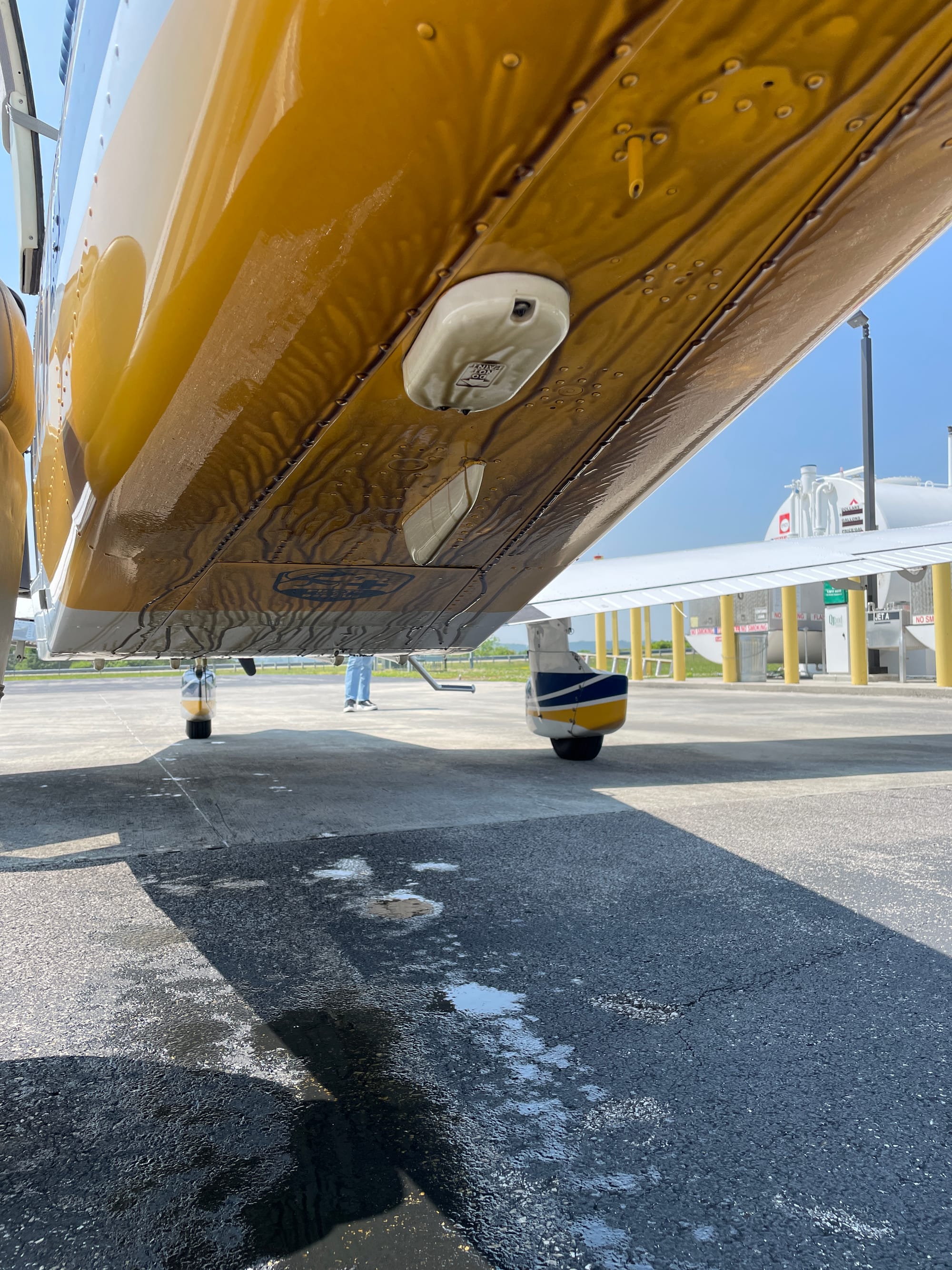
And then Kentucky, another Sunday, another field with nobody on it. He landed, went to refuel, and found oil everywhere and nothing on the dipstick. A local rescue lent him their battered van, and he drove it home to New York overnight and arrived in the morning wrecked, with every animal safe. The plane gets the photographs. The grind is a borrowed van, a box truck with a broken heater, and a man checking on puppies at a rest stop at three in the morning, because the alternative genuinely never crossed his mind.
The Big Plane
The fleet today is a serious step up from a forty year old Piper. The flagship is a Kodiak 100, a ten seat turboprop that runs about two million used and demands annual recurrent training from anyone who flies it. It is a proper bush plane. It lands and takes off inside a thousand feet, it wears enormous tyres, and Michael claims, with obvious delight, that the nose fork can shrug off a nine inch tree stump. It has carried sixty eight animals in one flight. The record, he thinks, is eighty three cats.
For Michael the big plane earns its keep where nothing else can. It flies the missions no van could attempt. Disaster response, when the roads are gone and the airport is the first way back in. The animals you cannot exactly load into Delta cargo, the endangered wolves and the hypothermic sea turtles. And the ones who would never survive a long haul by road, the seniors, the puppies, the kittens, the medical cases, the animals for whom hours in a crate is the difference between making it and not. On those runs the plane is not a luxury, it is the only thing that works. And when it is not flying a rescue, it earns its keep another way.
"The plane is about getting people's attention, getting press to the airport, and then getting a few lines about how you need to adopt, don't buy an animal."
A turboprop on a runway pulls a camera crew that a van never will, and Michael uses every frame of it to hammer the one message that matters to him. Adopt, do not shop.
The second aircraft is a 1980 Beechcraft Bonanza, donated by Tom Scholz, the founder and lead guitarist of the rock group Boston, a man who had flown it more than seven hundred thousand miles and once took it nonstop from Boston to Palm Beach with his wife beside him. Michael loves flying it, he says it handles like a classic sports car. Not every passenger respects the cockpit, mind you. He told me about the early flight when a cat clawed its way out of its carrier and climbed up under the panel into the flight deck, which, given that cats come with claws and aircraft come with wiring, is rather more exciting than it sounds.
The Animals Don't Know the Difference
Here is the part most people miss. The work gets stronger when the planes and the vans run as one, and the clever part is how seamlessly the two stitch together.
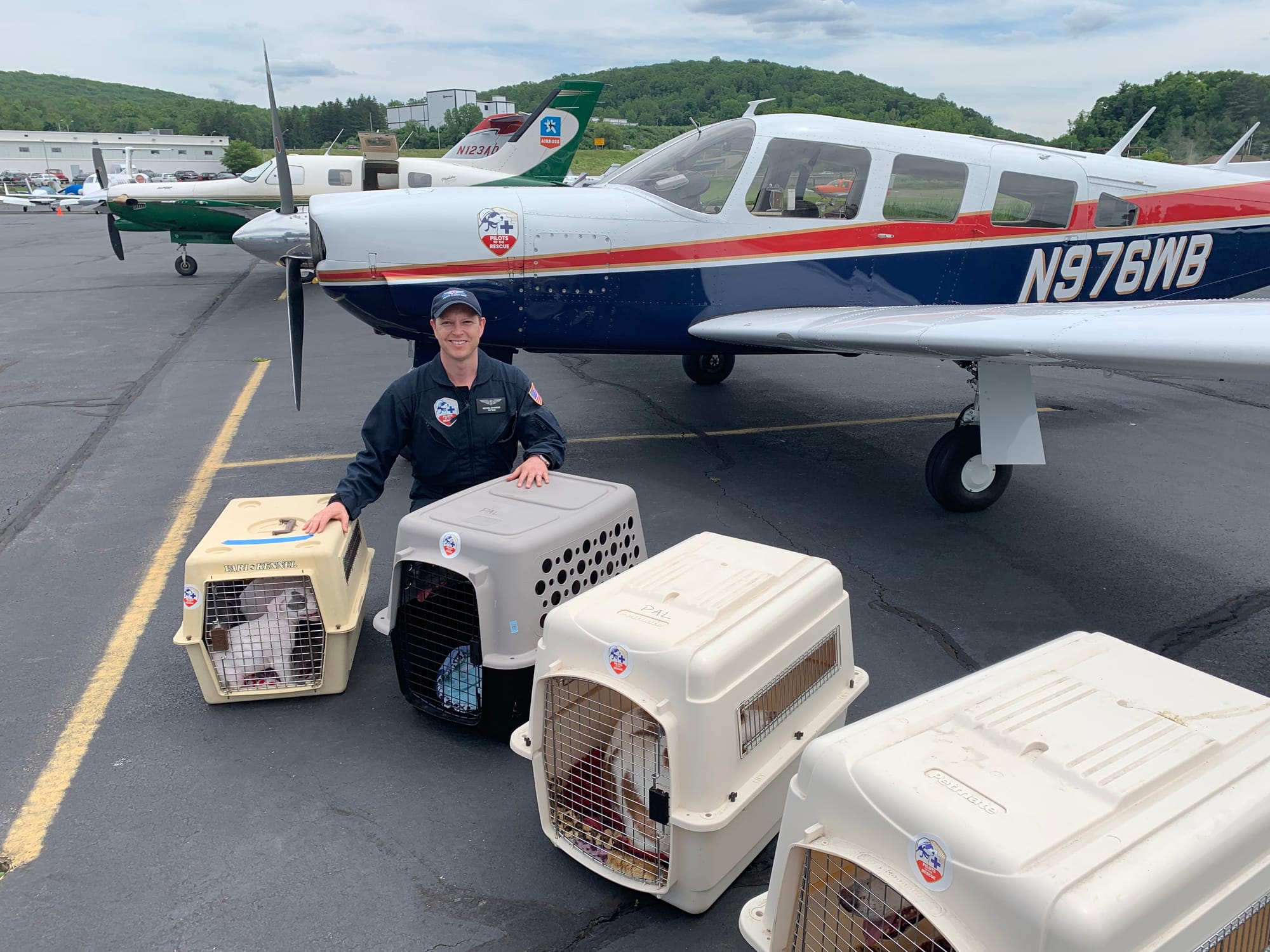
A van in Texas drives through the night while the animals sleep, meets a plane that flies them into Tennessee, and a final leg carries them the rest of the way. To the animals, Michael says, they do not know any different. That hybrid is the real machine. Seven vans, two planes, five staff, and a budget he puts at single digits in the millions, which in charity terms still makes them small.
The need is not small. More than a million animals are euthanised in American shelters every year, a number so large that Michael has stopped measuring himself against it. It is no longer about how many he can personally save, he told me, it is about creating awareness. Adopt don't shop.
He thinks about it as logistics with a conscience, supply and demand across a continent. California is overrun with Chihuahuas that New Yorkers would happily take. The south is full of pit bulls that a family in Iowa would adopt in a heartbeat. The animals are wanted, they are just in the wrong place, and transport is the bridge. The work has long outgrown dogs and cats, too. They fly endangered wolves between sanctuaries to give them a better shot at breeding, and they lift hypothermic sea turtles out of cold New England water and carry them south to recover.
A Franchise for Rescue Pilots
Ask Michael where this goes, and he does not talk about saving more animals himself. He talks about enabling everyone else who could.
The plan is a transport board, a roster of volunteer pilots flying missions under the Pilots to the Rescue banner, whatever aircraft they happen to own. He calls it a franchise opportunity, and he lights up describing the day he found a pilot already running a Kodiak 900, the same plane as his but four feet longer, quietly doing this exact work on his own. They are already doing it, he said. He just wants to enable them.
He also sees the disaster work growing, and he is blunt about why. It is not a matter of if, he said, it is a matter of when, because whether or not you believe in global warming, the hurricanes and the fires are coming harder and more often, and someone has to fly the animals out. He has designs on the sea, too. When he teased his director of development about buying a boat, a sort of Noah's Ark, she laughed and called it the ten year plan. He told her five. There is a quarter of a million dollar match campaign running right now for the second big plane, which he wants closed by the end of the year, and a new van has just landed in Vero Beach. The man does not slow down.
What He Would Change
I asked Michael what he would change if he could, and he reached for nothing soft. He would make spaying and neutering the law, with real penalties behind it. He would raise the penalties for animal abuse. He would subsidise veterinary care and vaccinations, because cost has become the thing that breaks the bond, and the single biggest reason people surrender an animal, he said, is that they can no longer afford to keep it.
And he has run clean out of patience for one particular myth, which he took apart with the conviction of a man who owns a German Shepherd. Enough with the vicious breed nonsense, he said, we all know it is people who make Dobermans and Rottweilers and pit bulls and shepherds vicious, not the animals.
When I asked who in the rescue world deserved a shout, he named the organisations he measures himself against. The Bissell Pet Foundation. Best Friends Animal Society, for its no kill movement and the way it lifts shelters smaller than itself. Guiding Eyes for the Blind, whom he defends for purpose breeding, because a guide dog cannot be left to chance.
And then, with obvious relish, a name I did not see coming. Carl Icahn, one of the last of the great corporate raiders, who runs a foundation, iPaw, that backs animal rescue, and is, Michael told me with some delight, a vegan. The men who once ran TWA may have feelings about Carl Icahn. The shelter animals of America, it turns out, have a quiet benefactor.
How To Help
You do not need a plane to be useful, and I asked Michael what an ordinary person could do. He did not hesitate. Share the story. Go to your local shelter and ask what they need. And if there is an animal with twenty four hours left on the clock, you can change its whole world just by walking it and giving it some love. A new pair of shoes or a new car is a thrill that fades, he told me. Making a real difference to a life, animal or human, is the kind that lasts.

Kali Concierge
Travelling with your dog? Ask Kali.
Where your dog is genuinely welcome to stay, eat, drink and walk in 50+ countries, how to cross borders with the right paperwork, and calm emergency medical advice with the nearest 24-hour vet. Free, day or night, in any language.