
La Grande Odyssée: Following Sled Dogs Across the Alps
La Grande Odyssée is a sled dog race run in stages through the French Alps, a different ski resort almost every day. The 2027 race runs from 7 to 19 January, from Avoriaz to La Toussuire. Here is the route, how to watch a stage, and why your own dog should sit this one out.
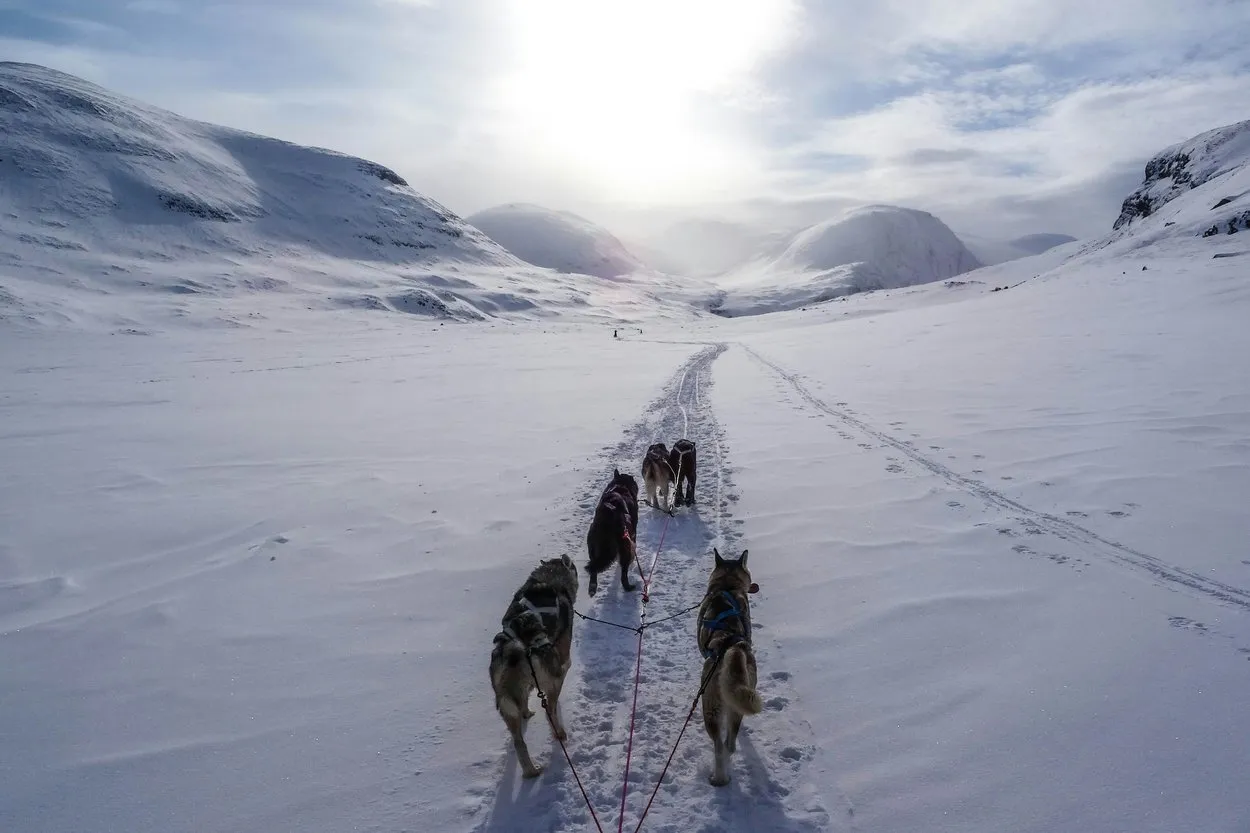
Last January the final stage of La Grande Odyssée set off in swirling snow from Bois Barbu, a clearing in the woods at Villard de Lans, the sleds leaving two minutes apart. By the end of it a Spaniard, Iker Ozkoidi Garcia, had won the race for the second year running, after twelve days of racing in which his dogs dominated every stage, over passes such as the Col de la Madeleine and through the high valleys of the Maurienne.
La Grande Odyssée is a sled dog race held in stages through the French Alps, a little like the Tour de France on snow: each day the teams race in a different resort, and the times add up to a winner. It has run every January since 2005, now with Royal Canin's name on it, and the organisers call it the most demanding sled dog race in Europe. Around 65 mushers and 600 dogs cover close to 400 km through about twenty resorts, villages and towns of Haute-Savoie, Savoie and Isère, and the climbing, more than 10,000 metres of it by the organisers' count, is what the mushers come for. Tens of thousands of people come to watch.
The Route in 2027
The 23rd edition runs from Thursday 7 to Tuesday 19 January 2027, and the organisers have published the places and dates, with the details for each day to follow. It opens in Avoriaz on 7 January, runs from Avoriaz to Montriond on the 8th, and reaches La Chapelle d'Abondance on Saturday the 9th. On the 10th the teams go from Saint François Longchamp to Doucy-Valmorel, the crossing of the Col de la Madeleine that the more seasoned mushers singled out last year, because on its demanding descents a musher has to keep the team in hand.
From there the race moves south: Savoie Grand Revard on the 11th, Les Sept Laux on the 12th, the Col de Porte above Grenoble on the 13th, and Villard de Lans on the 14th. Then it turns into the high Maurienne valley, with Aussois on the 15th, Bessans, Bonneval sur Arc and Val Cenis on the 16th, and Val Cenis to the Lac du Mont-Cenis on the 17th. Les Karellis has the 18th, and the race ends at La Toussuire and Le Corbier on Tuesday 19 January.
The entry list is out, and Ozkoidi Garcia is on it again, chasing a third win. The same list names the mushers entered for four shorter Trophées inside those dates: the first, the Trophée Haute-Savoie Mont-Blanc, runs from 7 to 10 January, and the last covers the final two days.
Watching a Stage
Each stop is a small festival. Avoriaz, a car-free resort, sets up a free race village on the Dromonts slope with cheese, mulled wine and apple matafan, a stand where you can meet the mushers, and a mascot called Sitka for photographs. It opens on 7 and 8 January at 10am.
At Villard de Lans last year the village had a tepee where two mushers explained the breeds and the gear a team runs with, and a dozen sled dogs of two breeds waited to be brushed by visitors. The teams left two minutes apart from 11.30am, the first arrived back from 12.15pm, and the podium was at about one. A free shuttle ran from the village centre to the start all day, which is the way to go: the resort said to leave the car in the village.
The start and finish area is where to be. At Villard de Lans the first teams were back within an hour of leaving, so you can see the same dogs go out fresh and come home tired. Out on the trail they are mostly out of sight, since last year's Doucy stage alone ran 35 km, and Villard de Lans closed its course to walkers.
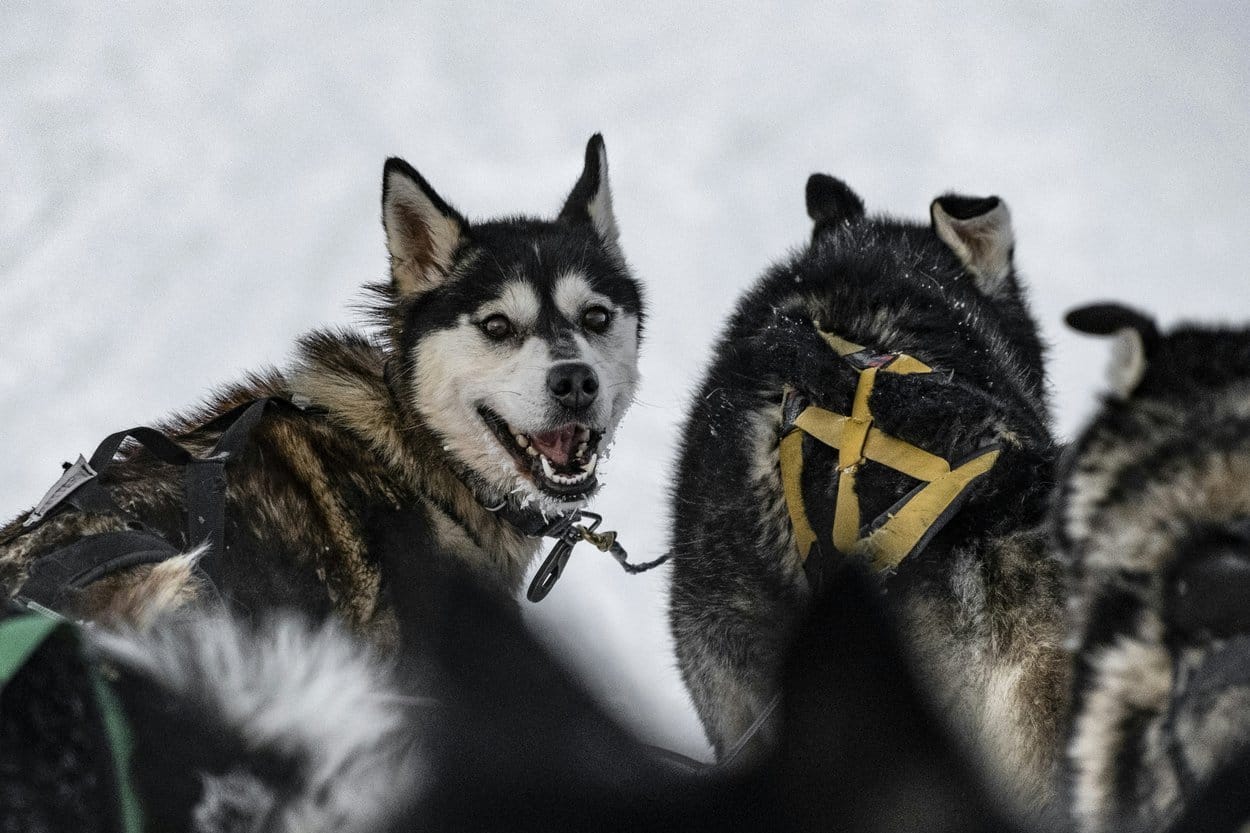
The organisers ask spectators to behave around the teams in a way that comes naturally to dog people once it is explained. Do not clap or wave your arms near the dogs, because it unsettles them. Do not touch a dog or a sled; only the musher handles the team. Stay at the edge of the track, especially where the crowd is thick. Every dog is checked by the race's volunteer vets, ten of them with two students, before it is allowed to start each stage.
Leave Your Own Dog at the Chalet
This is the one race in our calendar where the advice is plain: watch it without your dog. A sled team is a pack, keyed up to run, and the Doucy-Valmorel booklet for last year's stage explains that in the excitement of the race those dogs can turn on other animals near the track. The two communes there banned dogs from the course by municipal order and asked owners to keep theirs at least 100 metres back.
Villard de Lans went further and said dogs would not be allowed anywhere near the competition, even on a lead. Avoriaz asks that visitors' dogs stay on a lead at all times and very far from the teams and the course, near the start village, the preparation areas and the trail alike.
The 2027 rules for each stage will come with the daily programme, and they are set resort by resort, so check the one you plan to watch. The simplest plan is to choose a resort that welcomes dogs, walk yours in the morning and leave it in your room for the race. Avoriaz, which holds the French Toutourisme label for its welcome to dogs, lists the places to stay that take them and the winter paths to walk from the resort, though its page also says dogs are kept off the ski slopes and on a lead in the resort.
Avoriaz is honest about sled dogs too: they work there all winter, and the resort asks you to keep your own on a tight lead wherever teams are about.
Getting There
From the UK, the papers, crossings and return trip for a dog are in our guide to taking your dog from the UK to France, and the difference between a pet passport and an animal health certificate is in our piece on dog passports, health certificates and microchips. The race can move a stage when the snow is wrong, so check the programme the day before; last year, in ideal snow, most stages ran on the organisers' first-choice trails.
If you can catch only one part of it, make it the Haute Maurienne, which the organisers call the race's historic, unmissable passage. In 2027 the race reaches the valley at Aussois on 15 January and climbs to the Lac du Mont-Cenis on the 17th. Last year the mass start there drew what the organisers called an ever more enthusiastic crowd, and one musher, Jérémy Ferrand, slept out at the camp on the Col du Mont-Cenis with his dogs at minus ten and said he loved it.
Kali Concierge
Travelling with your dog? Ask Kali.
Where your dog is genuinely welcome to stay, eat, drink and walk in 50+ countries, how to cross borders with the right paperwork, and calm emergency medical advice with the nearest 24-hour vet. Free, day or night, in any language.