
Indy the Dog Wins Horror Category at 2026 Astra Awards
Indy the Dog, star of "Good Boy," just made history as the first canine to receive a major film acting award.

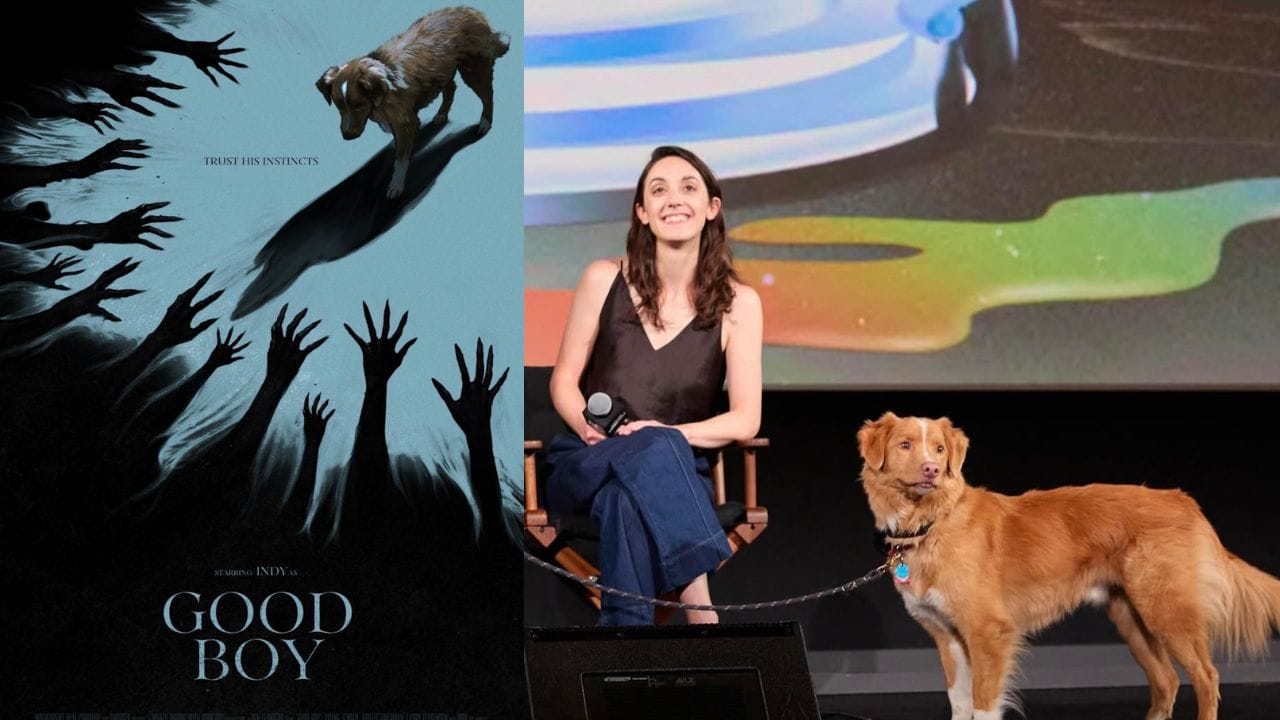
Awards season is well underway, and this year, one talented canine is making headlines for beating out a stacked group of human nominees in an unexpected, historic honor. On January 9, 2026, at the 9th Annual Astra Film Awards, Indy the Dog won the "Best Performance in a Horror or Thriller" category:
- Indy the Dog – Good Boy – WINNER
- Alison Brie – Together
- Ethan Hawke – Black Phone 2
- Sally Hawkins – Bring Her Back
- Sophie Thatcher – Companion
- Alfie Williams – 28 Years Later
Indy's role in Good Boy made waves upon its debut as a particularly innovative animal performance in a feature film. Instead of playing the sidekick to a human protagonist or being designated to cute cameos, Indy is the sole lead in Good Boy: a first-of-its-kind haunted house movie told from a dog's POV.
Good Boy relies entirely on Indy’s body language and expression to successfully spook the audience throughout its 1 hour and 13 minute runtime. Of course, Indy is a certified cutie pie, but critics duly praised him as a doggone-good actor in his own right. The flick holds a notable 90% on Rotten Tomatoes.
The online reaction to Good Boy upon the first trailer drop last year highlighted the oft-exploited emotional bond between viewers and animal protagonists. As is often the case with horror films involving animals, the most common question audiences preemptively ask is “Does the dog survive?” (Spoiler alert: yes, yes he does). That collective anxiety speaks to the horror genre's recurrent use of animal suffering or death to heighten stakes and advance a human-defined plot.
In a welcome departure from this horror convention, Good Boy contributes a powerful, less-seen perspective to the genre by centering a dog's heroism – fighting to save his owner from malevolent forces. The closest point of comparison for Good Boy, as broached by People magazine, may very well be Courage the Cowardly Dog: the bizarre early-2000s animated television series that gave kids (i.e., me) long-lasting nightmares.
By and large, Good Boy delivers in both genre playfulness and genuine scares, while never forfeiting its core function as "a tribute to dogs" and the human-dog bond.
Behind the Scenes
"Pet friendly" is just a label. See the standard →
Over the last decade, many animals have emerged as breakout stars in critically-acclaimed films. Just a few examples include Jenny the donkey in The Banshees of Inisherin, Messi the Dog as "Snoop" in Anatomy of a Fall, and Charlie the goat as "Black Phillip" in The Witch.
While there are some dog-specific film honors, such as The Palm Dog Award, presented yearly at the Cannes Film Festival, canine performances are rarely honored on par with human actors. Thus, Indy's big win marks a shift away from relegating dogs to novelty categories.
Concurrently, increased recognition of animals in the film industry inevitably renews ethical concerns; that is, the conditions under which these performances, particularly in horror movies, were achieved.
In the case of Good Boy, Indy's well-being and comfort was of the utmost priority. From start to finish, Indy was unwaveringly cared for and accompanied by his owners, Ben Leonberg and Kari Fischer, who directed and produced the film, respectively. The project took over three years to complete, as they were only filming Indy for "one to three hours a day."
Since the film avoids anthropomorphizing Indy through voice-over dialogue, its success was largely contingent on crafty camera work and audience projection. Leonberg, in an interview with Dread Central, explains how a convincing animal performance does not actually require an animal to experience the distressing emotions being evoked onscreen:
He walks into a room, we add the sound of a floorboard creak, and then we show his point of view of an empty corner. Then, when we return to the objective shot of him, of his face, there’s a blank expression in reality, but the filmmaking and the audience say, “No, that dog is scared,” even though he’s not; you’re scared. You’re just projecting your own feelings onto him
What's more, much of the film was shot in environments this clever Nova Scotia Duck Tolling Retriever already knew well, further curbing fear, stress, or overstimulation. When interviewed by People magazine, Leonberg revealed:
The house you see in the movie was our actual house, Indy lived there, so we would get a genuine performance. We appear in the film as the bodies of the main characters, so Indy would be acting with us. It’s a very special and very odd family project.
Despite the fact that Indy "does not know he's in a movie," an open letter was penned in his name to the Academy of Motion Picture Arts and Sciences back in October 2025, calling to make “the rich and complex contributions of our canine thespians" Oscar-eligible.
Granted, the Academy is notoriously stingy about introducing new award categories. Only last year, after an extensive campaign, did they establish a new category for Achievement in Stunt Design (which will begin accepting nominations in 2027). Such is to say, recognition of animal performances, and those responsible for their training and care, is still unheeded per the Academy's slow-moving precedent.
On the contrary, the Astra Awards, with their founding purpose "to elevate inclusive, emerging, and underrepresented talent in film, television, and media," are more apt to champion unconventional, under-recognized, boundary-pushing projects. Honoring a canine talent like Indy in a major acting category certainly reinforces that mission.
Not all dog friendly hotels are equal. See ours →
All in all, Indy’s big win at the Astras adds a memorable chapter to the 2026 awards circuit, inducing broader industry conversations about inclusion, visibility, and labor on film sets.
For more dog-friendly film content, keep reading here.