
Snow, Grit and Ice: Taking Your Dog on a Winter Trip
Frozen lakes, gritted pavements, antifreeze, ice balls in the fur and ski areas that keep dogs off the pistes. What the vets and the resorts themselves say, for anyone taking a dog to the mountains or a winter city.

Half of all ice related drownings involve someone trying to rescue a dog. That figure comes from the Royal Society for the Prevention of Accidents, quoted by the London Fire Brigade in its winter warning, and it is the best reason to plan a snow trip with a dog as carefully as a summer one. This guide draws on the guidance of veterinary and animal welfare bodies and on the resorts' own pages, read in October 2026.
Frozen Lakes and Rivers
The American Veterinary Medical Association tells owners to keep dogs away from frozen ponds, lakes and other water for exactly that reason, and adds the part that makes it dangerous for people too: an owner who instinctively goes after a dog that has broken through puts both lives at risk. The London Fire Brigade warns that even when ice appears thick from the bank, it becomes thinner very quickly, and asks owners to keep dogs on a lead near frozen water and never to throw a stick or a ball onto the ice.
The RSPCA's advice, given in the same warning by its pet welfare specialist Dr Sam Gaines, covers the moment it goes wrong. If your dog runs onto the ice, do not follow it. Call it back straight away, and if it is stuck, call the fire and rescue service rather than trying to reach it yourself. On a trip, know the local emergency number before you arrive, and keep the lead on beside every frozen lake.
Salt, Grit and Antifreeze
Resort villages and winter cities grit their pavements, hotel paths and car parks, and a dog walks through all of it. The British Veterinary Association warns that grit or rock salt can be extremely toxic to dogs if swallowed, and the Edinburgh Dog and Cat Home says rock salt can be toxic even in small doses. The PDSA explains how the harm usually happens: grit lodges between the pads and irritates the skin, and the dog then licks it off and upsets its stomach.
The fix is simple and worth packing for. The BVA's advice is to wipe the paws and belly after every snowy walk to remove ice and salt, and to check regularly for cracked pads and redness between the toes. Use lukewarm water, not hot: the Edinburgh Dog and Cat Home points out that hot water is painful on cold paws, and suggests a damp tile by the door that the dog walks across to clean its pads. The ASPCA suggests a towel in your pocket on long walks, a layer of petroleum jelly rubbed into the pads before you go out, and booties to keep salt and chemicals off the feet altogether.
Antifreeze is the more serious risk, and car parks and roadsides are where a dog finds it. Ethylene glycol, the usual ingredient, tastes sweet, so a dog that finds a puddle is likely to drink it, and the PDSA warns it can cause severe kidney damage that may be fatal. VCA Animal Hospitals notes that some de-icers also contain it. The signs the PDSA lists are twitching, vomiting, drinking more, fits and collapse, and its advice is to call a vet as soon as you think your dog may have swallowed antifreeze, even before any symptoms show, because treatment that starts quickly gives a better outcome. Our vet visit guide covers finding a vet before you need one.
Ice Balls, Coats and How Cold Is Too Cold
A dog that starts to limp halfway through a snowy walk has often packed ice between its toes. The AVMA says sudden lameness on a walk may be exactly that, and that clipping the hair between the toes reduces the chance of ice balls forming. When they do form, the Home's advice is to soak them off with warm water on a sponge rather than pulling them out of the fur, and boots with plenty of grip are worth trying if the dog will wear them.
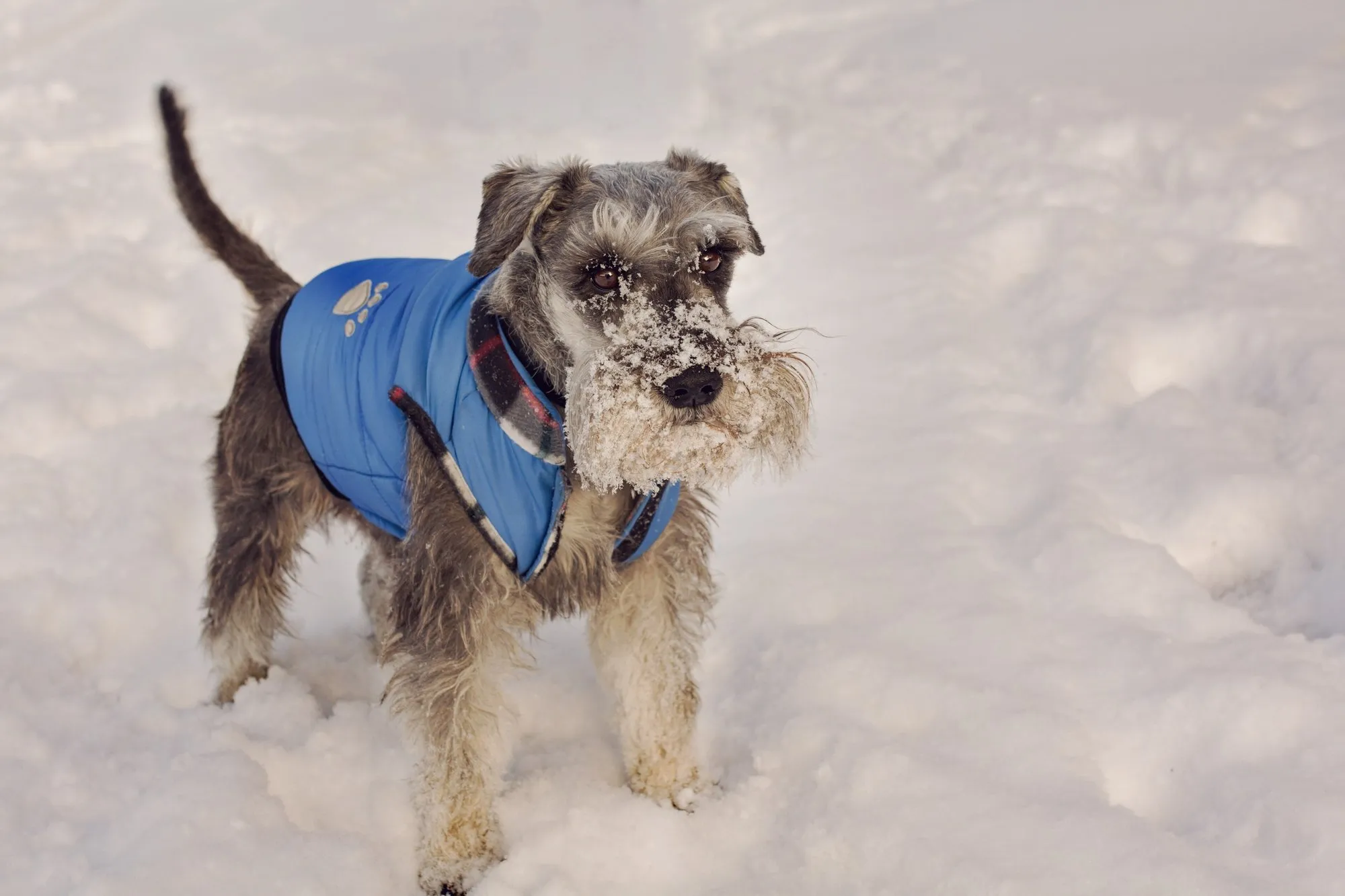
Not every dog needs a coat. The Edinburgh Dog and Cat Home names short-haired breeds such as greyhounds as the ones that benefit, and says many others are perfectly comfortable without one; the BVA adds older dogs and those with thin fur. The AVMA notes that short-legged dogs feel the cold sooner, because their bellies touch the snowy ground, and that a wet coat makes a dog colder than none, so pack more than one and put a dry one on each time. In deep cold, the Home suggests shorter walks more often.
The American Kennel Club says mild hypothermia begins when a dog's body temperature drops below 99°F, about 37°C, and that small dogs, puppies, older dogs and short-coated dogs lose heat fastest. Shivering and curling up are the first signs. The AVMA adds whining, anxiety, slowing down and looking for somewhere warm to burrow, and says a dog showing them needs to come inside quickly. Frostbite is harder to spot and may not be obvious for a few days, so if you suspect either, the AVMA's advice is to see a vet at once.

At the Ski Resort
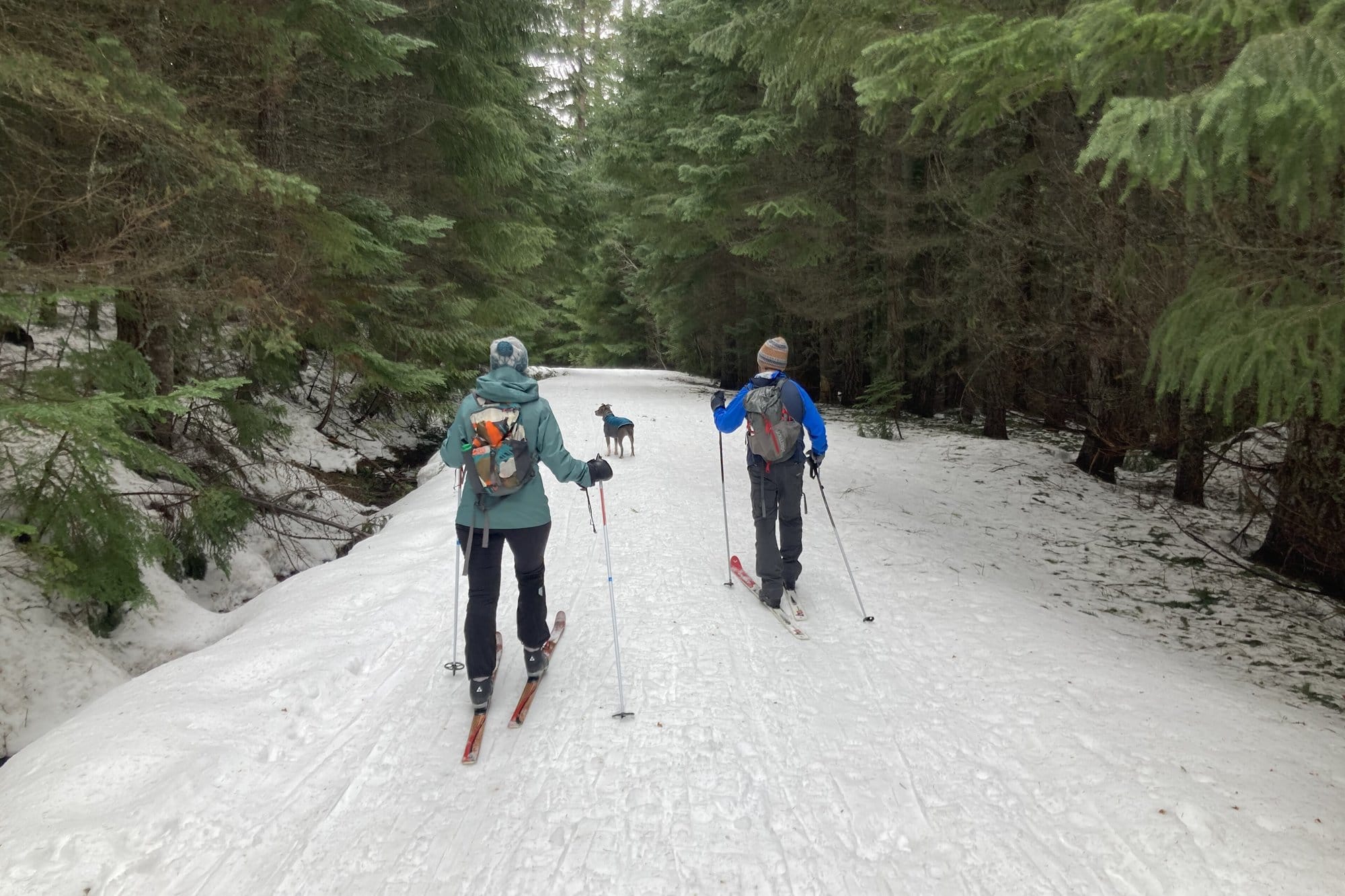
Most ski areas keep dogs off the pistes, and many keep them off the cross-country tracks too, so the walk you can take depends on the resort's own rules. In Switzerland the Aletsch Arena says plainly that dogs are not allowed on its ski slopes or cross-country trails, and points dog owners down the valley to Goms. There the dog trail from Oberwald to Obergesteln is a 4.26 km round trip from Oberwald station, about fifty minutes, built so that a skier and a dog can share it, whether with a poodle on a lead or a husky in a harness. The page gives the trail's hours as 9am to 4pm. Paw prints are welcome and anything else must be picked up, and the same page is clear that winter hikers, snowshoers and dog owners are not allowed on the ordinary Goms cross-country tracks.
Lifts are a separate question, and the answer varies lift by lift. In the Austrian SkiWelt, dogs ride selected mountain railways in winter too, and the lift company's own table sets out the terms, though it does not say which lifts are the winter ones. On the gondolas a dog must be on a lead in the queue, in the cabin and on the mountain, and must wear a muzzle in the gondola; at Going, a chairlift, the muzzle goes on for the ride. The dog ticket is €6 a day at Ellmau and Going and free at the other lifts on the table, Söll included in winter. Pack a muzzle the dog is used to, and check which lifts are running on your resort's own lift page before buying a pass. Our guide to walking and hiking with your dog covers mountain paths and livestock.
On the Road and in the Room
The AVMA warns that a car in cold weather becomes like a refrigerator and can rapidly chill a dog, and that young, old, ill or thin dogs should never be left in one. It also notes that snow and ice hide the scents a dog uses to find its way back, so more dogs go missing in winter: a collar with your mobile number and a microchip with up to date details matter more on a trip than at home. Our guide to driving with your dog covers restraint and breaks.
In the room, the BVA's advice for a dog's bed is a warm, draught-free spot insulated from the floor, with an extra blanket or two. Ask before you book where a wet dog can be dried, and whether the room has a cold stone floor. Our list of questions to ask any hotel is the place to start. Pack the towel, the booties, a spare coat and the paw balm, keep the lead on beside frozen water, and a dog will enjoy the snow at least as much as you do.
Kali Concierge
Travelling with your dog? Ask Kali.
Where your dog is genuinely welcome to stay, eat, drink and walk in 50+ countries, how to cross borders with the right paperwork, and calm emergency medical advice with the nearest 24-hour vet. Free, day or night, in any language.