
Dog Friendly City Guide: Valencia, Spain
Nine kilometres of garden in an old riverbed, a summer beach set aside for dogs at Pinedo, brunch in Ciutat Vella and a café where a colony of cats waits for a home. Where to eat, walk and stay with a dog in Valencia.

Valencia is a flat, sunny city that runs from a medieval old town to the sea, and for a dog it has one thing no other Spanish city can match: a river that is now a garden. The old bed of the Turia crosses the whole city from west to east as a ribbon of lawns, paths and bridges, so a morning walk can begin under orange trees near the cathedral and end among the white curves of the City of Arts and Sciences. Beyond that lie the beaches, the rice fields of the Albufera and the market gardens of the huerta. The city is still learning to open its tables to dogs, so the welcome is real but selective, and this guide names only places that state it.
Getting There With a Dog
Spain's agriculture ministry sets out the entry rules on its travelling with dogs, cats and ferrets page. Arriving from another European Union country, your dog needs a microchip, a rabies vaccination recorded in a European pet passport and valid on the day you travel, and the vaccination only counts once 21 days have passed since the injection. The minimum age for the vaccination is twelve weeks, and the ministry turns away any dog under fifteen weeks that has not been vaccinated.
From outside the European Union, your dog must enter through an authorised traveller entry point and be declared to customs, carrying an official health certificate signed by a government vet at home and presented at least in Spanish, with a signed declaration and certified copies of its identification and vaccination records. If your country is not on the European Union's list, a rabies blood test at an approved laboratory is also needed, taken at least 30 days after vaccination, with a result of at least 0.5 IU/ml, and the dog may only enter 90 days after the sample. Travelling from Great Britain, the government's taking your pet abroad page explains that a pet passport issued to someone living in England, Scotland or Wales cannot be used, so your vet issues an animal health certificate instead. For entry to the European Union it is valid for ten days from the date of issue, and you need a new one for each trip.
The train is the easiest way to arrive from Madrid or Barcelona. Renfe's travelling with pets page allows a pet of up to 10 kg in a carrier no larger than 60 by 35 by 35 centimetres, and it now carries dogs of up to 40 kg without a carrier on AVE, Avlo, long distance, Avant and regional trains. There are two places for large dogs on each train, in one set carriage, and one large dog per person. The supplement is 40 euros on AVE, Avlo and long distance services, it must be bought at least 24 hours before departure, and your dog wears a muzzle and a lead no longer than 1.5 metres at the station and while boarding. Bring its vaccination record or passport, and look for the paw print when you book.
Where to Stay
We have assessed two hotels in Valencia. Petit Palace Plaza de la Reina holds a D rank and sits on the old town square of the same name, beside the cathedral and a short walk from the Turia. Dogs stay free, with no fee and no deposit, most of its rooms take dogs, and your dog is welcome in the lounge. A dog of up to 66 lb can stay, it may be left in the room while you go out to dinner, and the staff will suggest walking routes to the parks nearby. It suits an independent owner with a calm dog who travels with its own bed and bowls.
Catalonia Excelsior holds an F rank and takes one dog per room, up to 45 lb, with a dog bed and food and water bowls provided. The fee is 22 euros a night with a 200 euro damage deposit, and a settled dog may be left in the room.
Eat and Drink
Valencia's dog friendly tables take some finding, so it pays to know where you are going. In Ciutat Vella, Federal Café on Carrer de l'Ambaixador Vich is the Valencia branch of the brunch and specialty coffee group, open from nine every morning, and our venue data records it as a place where dogs are welcome. It is the obvious first stop before a morning walk, a few streets from the Plaza de la Reina.
For something plant based, Almalibre Açaí House has two houses in the city, one in El Carmen and one in the centre, and its own guide to eating vegan with a pet in Valencia says plainly that you can come with your pet and that its doors are open to animals, on a quiet street beside the Jardí del Túria and the Serranos towers. Açaí bowls make it a good lunch on a hot day, when a heavy rice dish is the last thing either of you needs.
The most unusual stop is La Fábrica de Huellas on Carrer del Túria, a project of the ACAVALL foundation. It has two spaces: a cat café, where a colony of cats waits for adoption and entry is booked in advance, and a dog friendly space where, in its own words, you can come with your dog and have something good to eat beside it, with no booking needed. Every visit supports the foundation's work.
For a drink in the evening, head north to Benicalap and Maldita Bar on Carrer de José Albi, a neighbourhood bar where dogs of every size are welcome on the terrace and many of the regulars bring theirs. There is fresh water out for them and a biscuit on the house, and the owner's view is simply that dogs are family. It opens from seven in the evening Wednesday to Saturday and for Sunday lunch, so it suits a slow evening after a day by the river.
Walks and Beaches
The city tourism office's Valencia pet friendly page is the best single guide to where dogs can go, and it starts with the Jardí del Túria. The garden runs for nine kilometres through the city in the old bed of the river, flat all the way, with paths for walking and cycling and a running track of more than five kilometres. You pass the Palau de la Música, the giant Gulliver of the children's park, the Bioparc and the City of Arts and Sciences, and you cross under a string of bridges from the Serranos to the Assut d'Or. Dogs must be on a lead in public places across the city, but the tourism office notes dog socialisation areas spread across the city where dogs may run free.
At its western end the garden joins the Parc Natural del Túria, which the tourism office describes as offering more than 50 kilometres of trails along the river beyond the city. It is the place for a long morning walk on a weekend, before the heat of the day. Closer to the old town, the same page names the Viveros gardens, beside the Museu de Belles Arts, among the city's two million square metres of gardens.
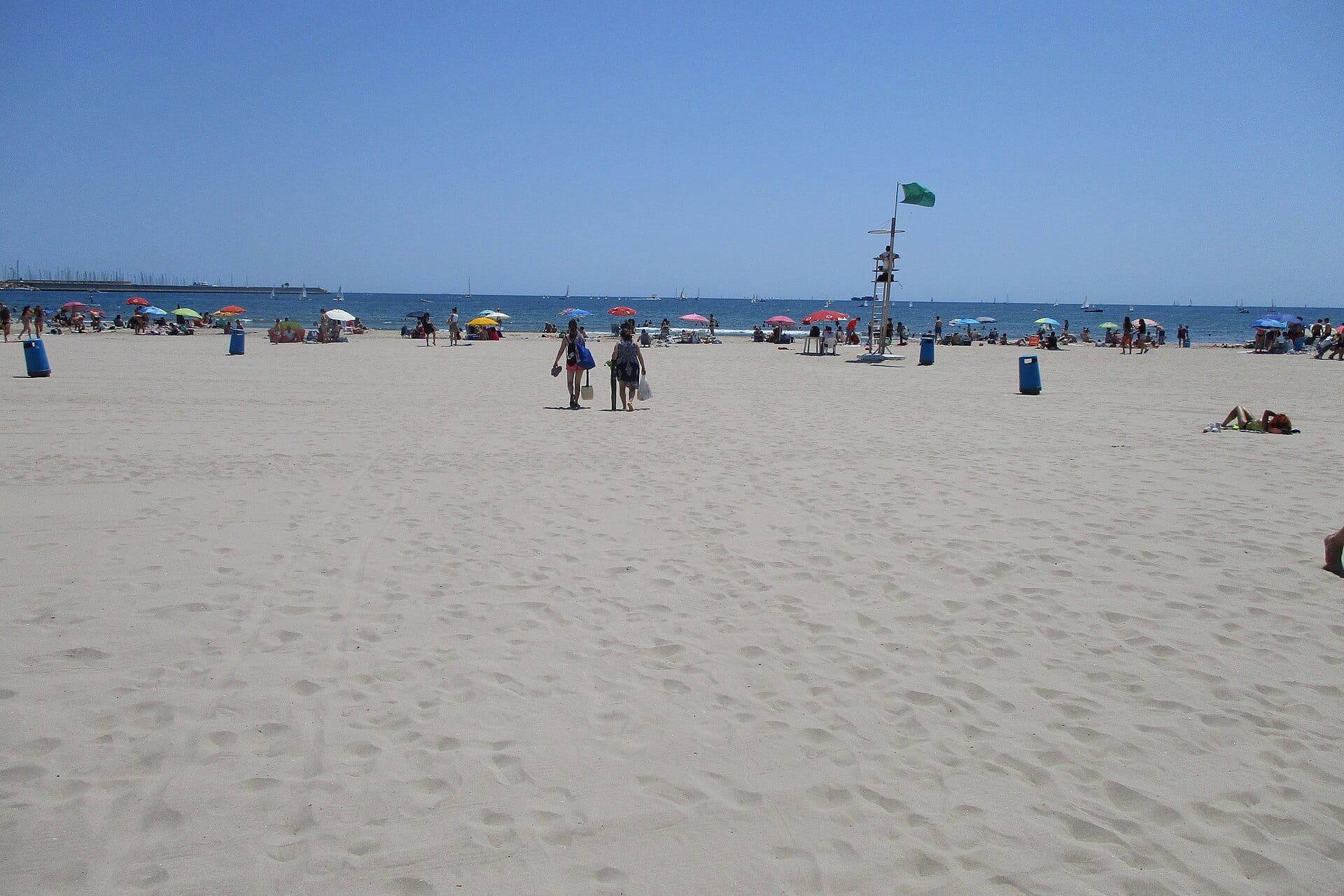
Then there is the sea. At Pinedo, south of the port, the tourism office says an area of the beach is reserved for dogs during the summer season. The page gives no dates, so check the season before you go. South again, the tourism office points dog owners towards L'Albufera, the freshwater lagoon and rice fields of the natural park, with dunes and Mediterranean woodland behind the beach at El Saler.
A Day Out
Start early in the old town with breakfast at Federal Café, then walk down to the river and take the garden east, crossing from shade to shade towards the City of Arts and Sciences, where the dog can rest on the grass while you look up at the buildings. Lunch can be açaí in El Carmen on the way back, or a coffee at La Fábrica de Huellas, where the cats are next door and your dog is welcome. In summer, take the afternoon to Pinedo for the dog area on the sand, or in the cooler months drive out to the Albufera for a walk among the rice fields and a look across the lagoon at sunset, the classic Valencian evening.
Good to Know
Valencia is hot from June to September, and the sand, the paving and the paths of the Turia all hold the heat, so walk early and late and carry water on every outing. Dogs must be on a lead or chain in public places, and the tourism office notes that some dogs must also wear a muzzle depending on their breed and circumstances. On the city's EMT buses, the tourism office explains that a dog needs the EMT Mascota pass, which costs five euros and is valid for two years, and must weigh no more than 15 kg and travel in a carrier no larger than 45 by 35 by 25 centimetres, with at most three animals on a bus. On the metro and tram, animals travel only in cages or carriers. Taxis carry dogs at the driver's discretion, with your dog held and kept off the seats.
Kali Concierge
Travelling with your dog? Ask Kali.
Where your dog is genuinely welcome to stay, eat, drink and walk in 50+ countries, how to cross borders with the right paperwork, and calm emergency medical advice with the nearest 24-hour vet. Free, day or night, in any language.